Skip to content
ScienceBlog.com
  • Featured Blogs
    • EU Horizon Blog
    • ESA Tracker
    • Experimental Frontiers
    • Josh Mitteldorf’s Aging Matters
    • Dr. Lu Zhang’s Gondwanaland
    • NeuroEdge
    • NIAAA
    • SciChi
    • The Poetry of Science
    • Wild Science
  • Topics
    • Brain & Behavior
    • Earth, Energy & Environment
    • Health
    • Life & Non-humans
    • Physics & Mathematics
    • Social Sciences
    • Space
    • Technology
  • Our Substack
  • Follow Us!
    • Bluesky
    • Threads
    • FaceBook
    • Google News
    • Twitter/X
  • Contribute/Contact

electronic devices

Professor Ly (back row, fourth from left) and her research team.

Novel Electric Field Discovery Points to Future of Quantum Computing, Nanotechnology

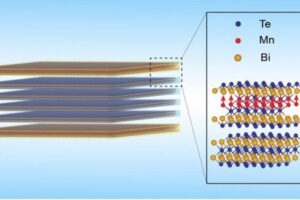
Four layers of a surface-conducting material (Bi2Te3) between two single layers of a magnetic insulator (MnBi2Te4). This structure creates the conditions to align the manganese spins (red arrows) and support a zero-resistance, spin-polarized current.

Could a Magnetic Sandwich Make Your Electronic Devices Work More Efficiently?

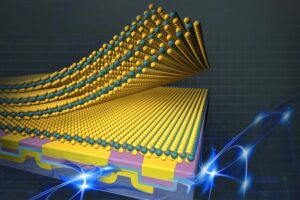
This artist’s rendition shows the newly developed integration platform. By engineering surface forces, researchers are able to directly integrate 2D materials into devices in a single contact-and-release step. Credits:Image: Courtesy of Sampson Wilcox/Research Laboratory of Electronics

Researchers safely integrate fragile 2D materials into devices

Substack subscription form sign up

Comments

  • Norwood johnson on Electrons in New Crystals Behave as If They Live in Four Dimensions
  • ScienceBlog.com on Hidden Geometry Could Finally Fix Quantum Computers
  • Theo Prinse on America Is Going Back to the Moon. This Time, It Plans to Stay
  • george w on Hidden Geometry Could Finally Fix Quantum Computers
  • Tom Hughes on Years of Exercise, Blood Pressure Drugs Failed to Slow Cognitive Decline in Seniors at Dementia Risk
© 2026 ScienceBlog.com | Follow our RSS / XML feed