Skip to content
ScienceBlog.com
  • Featured Blogs
    • EU Horizon Blog
    • ESA Tracker
    • Experimental Frontiers
    • Josh Mitteldorf’s Aging Matters
    • Dr. Lu Zhang’s Gondwanaland
    • NeuroEdge
    • NIAAA
    • SciChi
    • The Poetry of Science
    • Wild Science
  • Topics
    • Brain & Behavior
    • Earth, Energy & Environment
    • Health
    • Life & Non-humans
    • Physics & Mathematics
    • Social Sciences
    • Space
    • Technology
  • Our Substack
  • Follow Us!
    • Bluesky
    • Threads
    • FaceBook
    • Google News
    • Twitter/X
  • Contribute/Contact

Enceladus

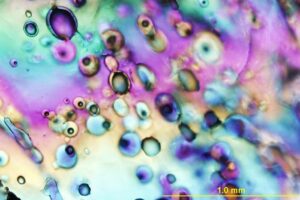
SwRI researchers are expanding corrosion modeling software to predict if icy worlds such as Saturn’s moon Enceladus may be able to harbor microbial life. In this cross-polarized light microscope image, pores are visible in glycine-doped ice formed in a laboratory investigation of Enceladus’ subsurface conditions. These pores could form habitable niches for microbial life.

Scientists Use Corrosion Modeling to Study Habitability on Saturn’s Icy Moon

Artist's impression of the Cassini spacecraft flying through plumes erupting from the south pole of Saturn's moon Enceladus. These plumes are much like geysers and expel a combination of water vapor, ice grains, salts, methane and other organic molecules.

What it would take to discover life on Saturn’s icy moon Enceladus

Substack subscription form sign up

Comments

  • Norwood johnson on Electrons in New Crystals Behave as If They Live in Four Dimensions
  • ScienceBlog.com on Hidden Geometry Could Finally Fix Quantum Computers
  • Theo Prinse on America Is Going Back to the Moon. This Time, It Plans to Stay
  • george w on Hidden Geometry Could Finally Fix Quantum Computers
  • Tom Hughes on Years of Exercise, Blood Pressure Drugs Failed to Slow Cognitive Decline in Seniors at Dementia Risk
© 2026 ScienceBlog.com | Follow our RSS / XML feed