Skip to content
ScienceBlog.com
  • Featured Blogs
    • EU Horizon Blog
    • ESA Tracker
    • Experimental Frontiers
    • Josh Mitteldorf’s Aging Matters
    • Dr. Lu Zhang’s Gondwanaland
    • NeuroEdge
    • NIAAA
    • SciChi
    • The Poetry of Science
    • Wild Science
  • Topics
    • Brain & Behavior
    • Earth, Energy & Environment
    • Health
    • Life & Non-humans
    • Physics & Mathematics
    • Social Sciences
    • Space
    • Technology
  • Our Substack
  • Follow Us!
    • Bluesky
    • Threads
    • FaceBook
    • Google News
    • Twitter/X
  • Contribute/Contact

engineering

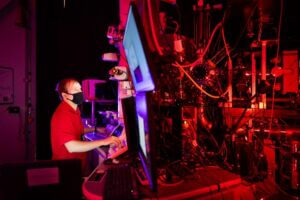
Sandia National Laboratories researcher Ryan Schoell uses a specialized transmission electron microscope technique developed by Khalid Hattar, Dan Bufford and Chris Barr to study fatigue cracks at the nanoscale.

‘Stunning’ discovery: Metals can heal themselves

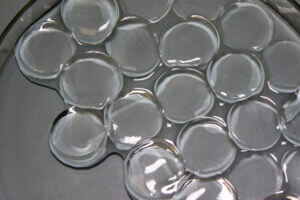
MIT engineers have synthesized a superabsorbent material that can soak up a record amount of moisture from the air, even in desert-like conditions. Pictured are the hydrogel discs swollen in water. Credits:Image: Gustav Graeber and Carlos D. Díaz-Marín

Engineers Develop Superabsorbent Material for Harvesting Water from Desert Air

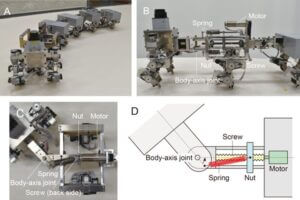
Centipede robot

Walking Robot Harnesses Instability for Navigation

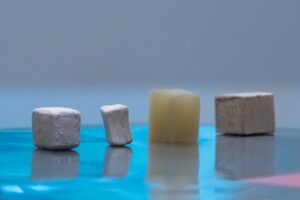
Wood pieces at different stages of modification, from natural (far right) to delignified (second from right) to dried, bleached and delignified (second from left) and MOF-infused functional wood (first on the left).

Engineered wood grows stronger while trapping carbon dioxide

The roughly 1.5-foot-long semi-sub prototype, built with off-the-shelf and 3D-printed parts, showed its seaworthiness in water tests, moving quickly with low drag and a low profile.

New ‘semi-sub’ shows spy potential of sailing at waterline

University of Minnesota Twin Cities Professor Bharat Jalan is co-leading a team that has developed a new method for making nano-membranes of “smart” materials, which will allow scientists to harness their unique properties for use in devices such as sensors and flexible electronics.

New process to create freestanding membranes of ‘smart’ materials

Newer posts
← Previous Page1 Page2
Substack subscription form sign up

Comments

  • Sue Ann Hayes on Hidden Nuclear Protein Fuels Pancreatic Cancer’s Deadly Aggression
  • Curtis Webber on The GPS-Killer? This Quantum Device ‘Feels’ Motion Like a Brain—Down to the Atomic Level
  • Ran on How the Age You First Had Sex Could Shape How You Age Decades Later
  • Sparty on How the Age You First Had Sex Could Shape How You Age Decades Later
  • Josh Mitteldorf on A Single TV Segment Sent Leucovorin Prescriptions for Autistic Children Soaring 2,000 Percent
© 2026 ScienceBlog.com | Follow our RSS / XML feed