Skip to content
ScienceBlog.com
  • Featured Blogs
    • EU Horizon Blog
    • ESA Tracker
    • Experimental Frontiers
    • Josh Mitteldorf’s Aging Matters
    • Dr. Lu Zhang’s Gondwanaland
    • NeuroEdge
    • NIAAA
    • SciChi
    • The Poetry of Science
    • Wild Science
  • Topics
    • Brain & Behavior
    • Earth, Energy & Environment
    • Health
    • Life & Non-humans
    • Physics & Mathematics
    • Social Sciences
    • Space
    • Technology
  • Our Substack
  • Follow Us!
    • Bluesky
    • Threads
    • FaceBook
    • Google News
    • Twitter/X
  • Contribute/Contact

environmental science

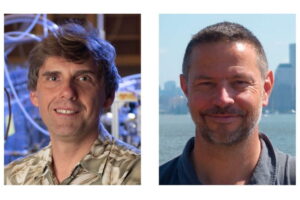
Sergey Nizkorodov, UCI professor of Chemistry (left), and atmospheric chemist Christian George of the National Center for Scientific Research at the University of Lyon, France, led a project to derive a new understanding of how hydroxide molecules help clear the atmosphere of human-emitted pollutants and greenhouse gases. UCI

Scientists discover a way Earth’s atmosphere cleans itself

Dartmouth researchers say a spike in home runs since 2010 is partly due to warmer, thinner air caused by global warming. Wrigley Field in Chicago is projected to be the most affected stadium in the future. (Photo by Mike Janes/Four Seam Images via AP)

Spike in major league home runs tied to climate change

Plant being recorded

Stressed plants emit airborne sounds that can be detected from over a meter away

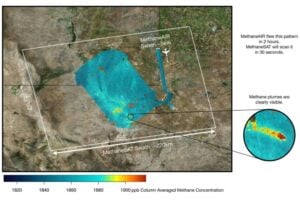
More precise than other methane-sensing satellites, MethaneSAT will allow scientists to track emissions to their sources and provide key data for reduction efforts. It is scheduled to launch early next year. Courtesy of Steven Wofsy

Methane-tracking satellite may be fastest way to slow climate change

Satellite data from 30 years of observations is helping researchers tease apart natural and human-caused drivers of sea level rise. The information will help planners in regions like New Orleans, Louisiana, along the U.S. Gulf Coast to prepare for the future. Credit: NASA

NASA Uses 30-Year Satellite Record to Track and Project Rising Seas

Dog with crazy eyes

What ‘chornobyl dogs’ can tell us about survival in contaminated environments

Tree canopy

A mixture of trees purifies urban air best

New growth emerges in a badly burned section of the Tahoe National Forest. (Image credit: Getty Images)

CA forests are stranded in habitats that have grown too warm

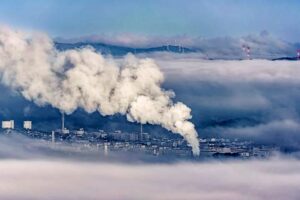
Pollution from factory drifts high into the atmosphere in this image

It’s complicated: Scientists warn of many dangerous climate feedback loops

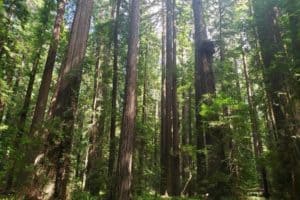
Redwood forests such as this one in California's Humboldt County are key components of the state's climate change mitigation efforts, but UCI researchers suggest that ongoing greenhouse gas emissions may limit the ability of trees to remove carbon dioxide from the atmosphere.

Forest trees find a new watery ‘sweet spot’ when CO2 is high

For their artificial fairy, Hao Zeng and Jianfeng Yang got inspired by dandelion seeds.

Fairy-like robot flies by the power of wind and light

Plastic stadium seating chairs

Want a stronger biodegradable plastic? Add a ‘pinch’ of cream of tartar

A Lungful of Flying Lead

Underwater algae

Sunburnt Algae: Science Poetry Friday

Older posts
Newer posts
← Previous Page1 … Page4 Page5 Page6 Next →
Substack subscription form sign up

Comments

  • Mark Mellinger on Living Plastic Can Self-Destruct on Command
  • Marie Feret on The Silent Frequency That Makes Old Buildings Feel Haunted
  • Dax on The Silent Frequency That Makes Old Buildings Feel Haunted
  • Karoly Mirnics on Common Prescription Drugs May Disrupt Cholesterol Pathways in the Womb and Raise Autism Risk
  • Aizen on Laziness helped lead to extinction of Homo erectus
© 2026 ScienceBlog.com | Follow our RSS / XML feed