Skip to content
ScienceBlog.com
  • Featured Blogs
    • EU Horizon Blog
    • ESA Tracker
    • Experimental Frontiers
    • Josh Mitteldorf’s Aging Matters
    • Dr. Lu Zhang’s Gondwanaland
    • NeuroEdge
    • NIAAA
    • SciChi
    • The Poetry of Science
    • Wild Science
  • Topics
    • Brain & Behavior
    • Earth, Energy & Environment
    • Health
    • Life & Non-humans
    • Physics & Mathematics
    • Social Sciences
    • Space
    • Technology
  • Our Substack
  • Follow Us!
    • Bluesky
    • Threads
    • FaceBook
    • Google News
    • Twitter/X
  • Contribute/Contact

Europe

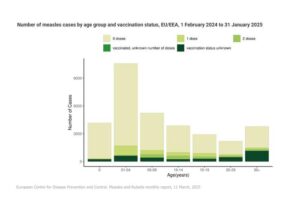
Measles vaccination coverage remains suboptimal in many EU/EEA countries. Sustained improvements are required in the coverage of routine childhood immunisation programmes, as well as closing immunity gaps in adolescents and adults who have missed vaccination opportunities in the past.

Measles Comeback: Europe Faces Major Surge as Vaccination Gaps Exposed

eerie witch creature

How a witch-hunting manual & social networks helped ignite Europe’s witch craze

Caption - Coring barrel stowed along the starboard rail of the R/V Armstrong.

Gulf Stream’s Surprising Past Raises Red Flags for Europe’s Climate Future

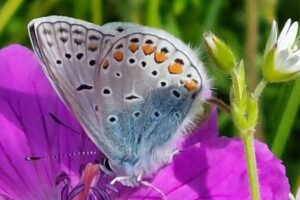
The Common Blue (Polyommatus icarus) is one of the omnipresent butterflies of Middle Europe.

Human activities appear to drive insect declines in Europe

Tracks in snow. Pixabay

Extreme cooling ended the first human occupation of Europe

Building bridges between Ukrainian and EU researchers

Substack subscription form sign up

Comments

  • Curtis Webber on The GPS-Killer? This Quantum Device ‘Feels’ Motion Like a Brain—Down to the Atomic Level
  • Ran on How the Age You First Had Sex Could Shape How You Age Decades Later
  • Sparty on How the Age You First Had Sex Could Shape How You Age Decades Later
  • Josh Mitteldorf on A Single TV Segment Sent Leucovorin Prescriptions for Autistic Children Soaring 2,000 Percent
  • Josh Mitteldorf on A Single TV Segment Sent Leucovorin Prescriptions for Autistic Children Soaring 2,000 Percent
© 2026 ScienceBlog.com | Follow our RSS / XML feed