Skip to content
ScienceBlog.com
  • Featured Blogs
    • EU Horizon Blog
    • ESA Tracker
    • Experimental Frontiers
    • Josh Mitteldorf’s Aging Matters
    • Dr. Lu Zhang’s Gondwanaland
    • NeuroEdge
    • NIAAA
    • SciChi
    • The Poetry of Science
    • Wild Science
  • Topics
    • Brain & Behavior
    • Earth, Energy & Environment
    • Health
    • Life & Non-humans
    • Physics & Mathematics
    • Social Sciences
    • Space
    • Technology
  • Our Substack
  • Follow Us!
    • Bluesky
    • Threads
    • FaceBook
    • Google News
    • Twitter/X
  • Contribute/Contact

extracellular vesicles

Ohio State logo

The proteins that make cell-to-cell cargo transport possible

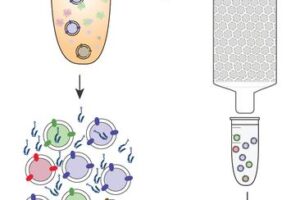
The team’s overall goal was to be able to compare the amounts of α-synuclein protein contained in extracellular vesicles (right side) relative to α-synuclein contained in total plasma (left side). To achieve the former, they innovated an already validated EV-isolation and analysis process with a critical “protein protection assay.”

Breakthrough in Parkinson’s Disease Detection: New Blood Test Method Shows Promise

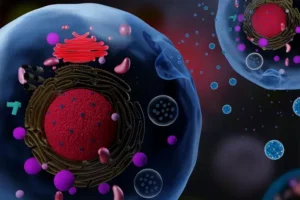
Extracellular vesicles are small bubbles that cells can send to each other to exchange information. Image: Getty Images

Harnessing Cell Communication Bubbles for Targeted Cancer Treatment

Substack subscription form sign up

Comments

  • Marco Messina on More Than a Third of Americans Have Lost Relationships Over Politics
  • Anon on Why Fructose Behaves Less Like a Calorie and More Like a Hormone
  • Mark Mellinger on Living Plastic Can Self-Destruct on Command
  • Marie Feret on The Silent Frequency That Makes Old Buildings Feel Haunted
  • Dax on The Silent Frequency That Makes Old Buildings Feel Haunted
© 2026 ScienceBlog.com | Follow our RSS / XML feed