Skip to content
ScienceBlog.com
  • Featured Blogs
    • EU Horizon Blog
    • ESA Tracker
    • Experimental Frontiers
    • Josh Mitteldorf’s Aging Matters
    • Dr. Lu Zhang’s Gondwanaland
    • NeuroEdge
    • NIAAA
    • SciChi
    • The Poetry of Science
    • Wild Science
  • Topics
    • Brain & Behavior
    • Earth, Energy & Environment
    • Health
    • Life & Non-humans
    • Physics & Mathematics
    • Social Sciences
    • Space
    • Technology
  • Our Substack
  • Follow Us!
    • Bluesky
    • Threads
    • FaceBook
    • Google News
    • Twitter/X
  • Contribute/Contact

extreme environments

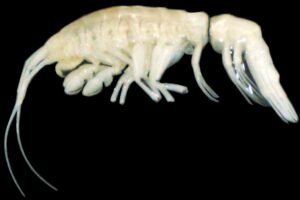
The newly discovered crustacean Ducibella camanchaca is the first large, active predatory amphipod from the extreme depths of Atacama Trench.

Team Discovers New Ocean Predator

A flat area of the Atacama Desert between Antofagasta and Taltal

Scientists Find Living Microbes Thriving in World’s Driest Desert

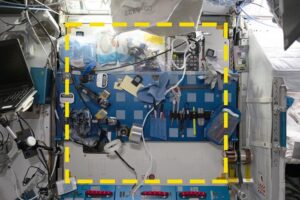
A sample location from the Sampling Quadrangle Assemblages Research Experiment (SQuARE), Square 03 in the starboard Maintenance Work Area of the International Space Station. An open crew berth is visible at right. The yellow dotted line indicates the boundaries of the sample area. Credit: NASA/ISSAP.

Space Station Archaeologists Unveil New Insights into Astronaut Life

Gallium oxide-based devices can operate in extreme environments, such as outer space, where it can withstand high temperatures and radiation without serious degradation. © 2023 KAUST; Eliza Mkhitaryan.

Tough memory device aims for space missions

Substack subscription form sign up

Comments

  • Sue Ann Hayes on Hidden Nuclear Protein Fuels Pancreatic Cancer’s Deadly Aggression
  • Curtis Webber on The GPS-Killer? This Quantum Device ‘Feels’ Motion Like a Brain—Down to the Atomic Level
  • Ran on How the Age You First Had Sex Could Shape How You Age Decades Later
  • Sparty on How the Age You First Had Sex Could Shape How You Age Decades Later
  • Josh Mitteldorf on A Single TV Segment Sent Leucovorin Prescriptions for Autistic Children Soaring 2,000 Percent
© 2026 ScienceBlog.com | Follow our RSS / XML feed