Skip to content
ScienceBlog.com
  • Featured Blogs
    • EU Horizon Blog
    • ESA Tracker
    • Experimental Frontiers
    • Josh Mitteldorf’s Aging Matters
    • Dr. Lu Zhang’s Gondwanaland
    • NeuroEdge
    • NIAAA
    • SciChi
    • The Poetry of Science
    • Wild Science
  • Topics
    • Brain & Behavior
    • Earth, Energy & Environment
    • Health
    • Life & Non-humans
    • Physics & Mathematics
    • Social Sciences
    • Space
    • Technology
  • Our Substack
  • Follow Us!
    • Bluesky
    • Threads
    • FaceBook
    • Google News
    • Twitter/X
  • Contribute/Contact

Fast Radio Bursts

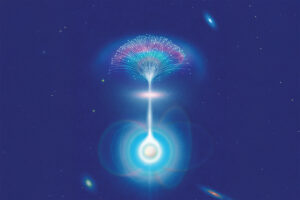
An artist's illustration of a neutron star emitting a radio beam from within its magnetic environment. As the radio waves travel through dense plasma within the galaxy, they split into multiple paths, causing the observed signal to flicker in brightness. Credits:Credit: Daniel Liévano, edited by MIT News

MIT scientists pin down the origins of a fast radio burst

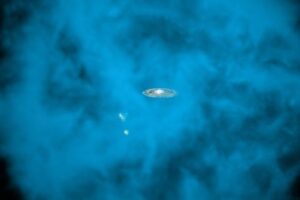
Pictured above: Artist's depiction of our Milky Way galaxy and its small galaxy companions surrounded by a giant halo of million-degree gas. Credit: NASA/CXC/M.Weiss/Ohio State/A Gupta et al

Milky Way’s Halo Surprisingly Empty

Substack subscription form sign up

Comments

  • Brunette Keller on How New Herpes Drugs Jam a Virus’s Replication Engine
  • Aizen on Laziness helped lead to extinction of Homo erectus
  • Norwood johnson on Electrons in New Crystals Behave as If They Live in Four Dimensions
  • ScienceBlog.com on Hidden Geometry Could Finally Fix Quantum Computers
  • Theo Prinse on America Is Going Back to the Moon. This Time, It Plans to Stay
© 2026 ScienceBlog.com | Follow our RSS / XML feed