Skip to content
ScienceBlog.com
  • Featured Blogs
    • EU Horizon Blog
    • ESA Tracker
    • Experimental Frontiers
    • Josh Mitteldorf’s Aging Matters
    • Dr. Lu Zhang’s Gondwanaland
    • NeuroEdge
    • NIAAA
    • SciChi
    • The Poetry of Science
    • Wild Science
  • Topics
    • Brain & Behavior
    • Earth, Energy & Environment
    • Health
    • Life & Non-humans
    • Physics & Mathematics
    • Social Sciences
    • Space
    • Technology
  • Our Substack
  • Follow Us!
    • Bluesky
    • Threads
    • FaceBook
    • Google News
    • Twitter/X
  • Contribute/Contact

Fundamental Physics

A powerful laser is directed into a jet of gas, forming a bright plasma that generates ultraviolet light. As this light interacts with the remaining gas in the vacuum chamber, it creates a visible white line. This method allows scientists to accurately measure the energy required to excite the thorium-229 nucleus, which is crucial for developing a future nuclear clock.

Nuclear Clocks: The Next Frontier in Ultraprecise Timekeeping

ISIS Neutron & Muon Source at the STFC Rutherford Appleton Laboratory in the UK

Muon Colliders: The Next Frontier in Particle Physics

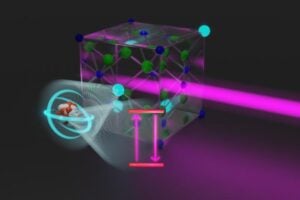
A laser beam hits thorium nuclei, embedded in a crystal.

Scientists Excite Thorium-229 Nucleus with Laser, Paving the Way for Unprecedented Precision Measurements

Quantum vacuum fluctuations, conceptual illustration.

Exploring vacuum energy

Illustration of spherical explosion

Astrophysicists discover the perfect explosion in space

Substack subscription form sign up

Comments

  • Kidreadytobreed on Global warming reduces available wind energy
  • James on Global warming reduces available wind energy
  • James on Global warming reduces available wind energy
  • Booklet AI on Key to online education: Test early and often
  • Karoly Mirnics on Common Prescription Drugs May Disrupt Cholesterol Pathways in the Womb and Raise Autism Risk
© 2026 ScienceBlog.com | Follow our RSS / XML feed