Skip to content
ScienceBlog.com
  • Featured Blogs
    • EU Horizon Blog
    • ESA Tracker
    • Experimental Frontiers
    • Josh Mitteldorf’s Aging Matters
    • Dr. Lu Zhang’s Gondwanaland
    • NeuroEdge
    • NIAAA
    • SciChi
    • The Poetry of Science
    • Wild Science
  • Topics
    • Brain & Behavior
    • Earth, Energy & Environment
    • Health
    • Life & Non-humans
    • Physics & Mathematics
    • Social Sciences
    • Space
    • Technology
  • Our Substack
  • Follow Us!
    • Bluesky
    • Threads
    • FaceBook
    • Google News
    • Twitter/X
  • Contribute/Contact

Ganymede

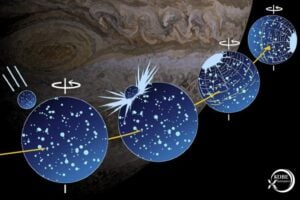
Kobe University researcher Naoyuki Hirata was the first to discover that an asteroid impact on Jupiter's moon Ganymede occurred almost exactly on the meridian farthest from Jupiter. This finding suggested that Ganymede had experienced a reorientation of its rotational axis, enabling Hirata to calculate the type of impact that could have caused this shift.

Ancient Asteroid Impact Shifted Jupiter’s Largest Moon

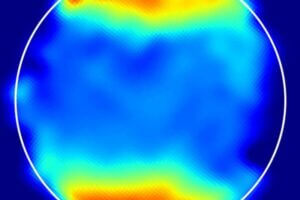
A spectroscopic map of Ganymede derived from JWST measurements shows light absorption around the poles characteristic of the molecule hydrogen peroxide. The circle outlines the surfaces of the moon.

James Webb Space Telescope sees Jupiter moons in a new light

Substack subscription form sign up

Comments

  • Sparty on How the Age You First Had Sex Could Shape How You Age Decades Later
  • Josh Mitteldorf on A Single TV Segment Sent Leucovorin Prescriptions for Autistic Children Soaring 2,000 Percent
  • Josh Mitteldorf on A Single TV Segment Sent Leucovorin Prescriptions for Autistic Children Soaring 2,000 Percent
  • Josh Mitteldorf on A Pill That Keeps Your Throat Awake Could Transform Sleep Apnea Treatment
  • Josh Mitteldorf on How the Age You First Had Sex Could Shape How You Age Decades Later
© 2026 ScienceBlog.com | Follow our RSS / XML feed