Skip to content
ScienceBlog.com
  • Featured Blogs
    • EU Horizon Blog
    • ESA Tracker
    • Experimental Frontiers
    • Josh Mitteldorf’s Aging Matters
    • Dr. Lu Zhang’s Gondwanaland
    • NeuroEdge
    • NIAAA
    • SciChi
    • The Poetry of Science
    • Wild Science
  • Topics
    • Brain & Behavior
    • Earth, Energy & Environment
    • Health
    • Life & Non-humans
    • Physics & Mathematics
    • Social Sciences
    • Space
    • Technology
  • Our Substack
  • Follow Us!
    • Bluesky
    • Threads
    • FaceBook
    • Google News
    • Twitter/X
  • Contribute/Contact

genetic diversity

The Chinese Pangolin is one of two species that researchers have now provided high-quality, nearly gapless genome sequences and analyzed these for information to aid in conservation of these animals. The Chinese Pangolin and the Malayan Pangolin, also studied here, are listed as critically endangered on the Red List of the IUCN.

World Pangolin Day celebrated with new genomes to aid the world’s most trafficked animal

Heather Huson racing in an Alaska Dog Mushers Association Challenge Series race in 2005 at the Jeff Studdard Sled Dog Race Track in Fairbanks, Alaska.

Genomics reveals sled dogs’ Siberian lineage

Artist's impression of Denisovan family near cave opening

Neanderthal DNA Reveals Clues to Their Extinction

Ohio State logo

Using AI to scrutinize, validate theories on animal evolution

Wrangel Island tusk

Last surviving woolly mammoths were inbred but not doomed to extinction

map of southern Africa

Iconic savanna mammals face genetic problems due to fences and roads

Pygmy blue whale

Scientists weigh up current status of blue whale populations around the world

Ohio State logo

Genomic analysis in snakes shows link between neutral, functional genetic diversity

Whale bones on South Georgia Island.

DNA from discarded whale bones suggests loss of genetic diversity due to commercial whaling

The core formula of our new inference method is shown. The image depicts a cliff painting, illustrating the population of human ancestor pull together to survive the unknown danger in the darkness during the ancient severe bottleneck.

Early ancestral bottleneck could’ve spelled the end for modern humans

Elephants that once threatened Rome could help save their descendants

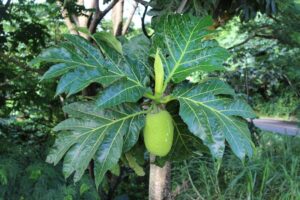
A breadfruit tree in St. Vincent and the Grenadines. Photo by Nyree Zerega

Caribbean breadfruit traced back to Capt. Bligh’s 1791-93 journey

Caring Corals

Substack subscription form sign up

Comments

  • Karoly Mirnics on Common Prescription Drugs May Disrupt Cholesterol Pathways in the Womb and Raise Autism Risk
  • Aizen on Laziness helped lead to extinction of Homo erectus
  • Norwood johnson on Electrons in New Crystals Behave as If They Live in Four Dimensions
  • ScienceBlog.com on Hidden Geometry Could Finally Fix Quantum Computers
  • Theo Prinse on America Is Going Back to the Moon. This Time, It Plans to Stay
© 2026 ScienceBlog.com | Follow our RSS / XML feed