Skip to content
ScienceBlog.com
  • Featured Blogs
    • EU Horizon Blog
    • ESA Tracker
    • Experimental Frontiers
    • Josh Mitteldorf’s Aging Matters
    • Dr. Lu Zhang’s Gondwanaland
    • NeuroEdge
    • NIAAA
    • SciChi
    • The Poetry of Science
    • Wild Science
  • Topics
    • Brain & Behavior
    • Earth, Energy & Environment
    • Health
    • Life & Non-humans
    • Physics & Mathematics
    • Social Sciences
    • Space
    • Technology
  • Our Substack
  • Follow Us!
    • Bluesky
    • Threads
    • FaceBook
    • Google News
    • Twitter/X
  • Contribute/Contact

genetic engineering

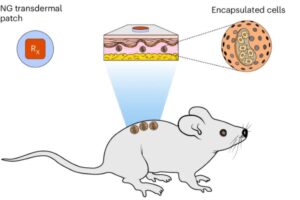
Transdermal patch infographic

Simple Skin Patch Could Control Next-Gen Cell Therapies for Diabetes

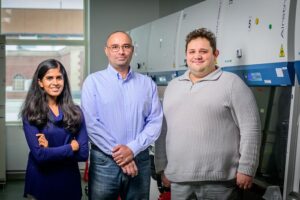
Prof Pablo Perez-Pinera, center is joined by fellow researchers Shraddha Shirguppe, left, and Angelo Miskalis, right, in a research space at Everitt Lab. Photo taken at the University of Illinois Urbana-Champaign on Friday, Dec. 20, 2024. (Photo by Fred Zwicky / University of Illinois Urbana-Champaign)

Gene Editing Tool Shows Promise for Treating Alzheimer’s Disease

bubbles

Tiny Microbes Engineered to Convert CO2 into Pharma Building Blocks

Sascha Duttke, an assistant professor in the School of Molecular Biosciences in Washington State University's College of Veterinary Medicine, poses for a photo with a projected image of DNA strands (photo by College of Veterinary Medicine/Ted S. Warren).

Hidden DNA ‘Spatial Grammar’ Reshapes Understanding of Gene Regulation

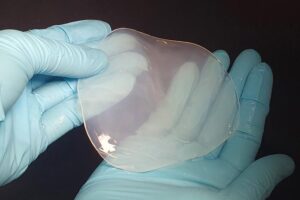
Bacterial cellulose in the wet state.

How researchers turn bacteria into cellulose-producing mini-factories

Retrotransposons found in the genomes of the white-throated sparrow and the zebra finch are shown to safely shepherd transgenes into the human genome, providing a gene therapy approach complementary to CRISPR-Cas9 gene editing.

Junk DNA in birds may hold key to safe, efficient gene therapy

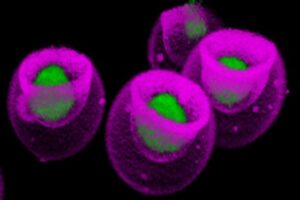
Confocal microscopic image shows mesenchymal stem cells (green) captured within nanovials (pink). The nanovial technology was developed by UCLA's Dino Di Carlo and colleagues.

‘Central dogma’ of biology be misleading bioengineers

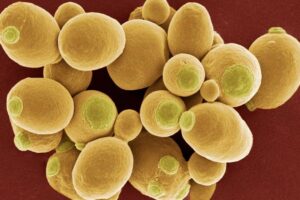
Genetically engineered yeast cells can be used to produce the naturally occurring substance, alstonine, which has shown promising results in terms of being used in the treatment of mental disorders. Photo: Steve Gschmeissner.

Yeast cells can produce drugs for treatment of psychotic disorders

University of Rochester researchers successfully transferred a longevity gene from naked mole rats to mice, resulting in improved health and an extension of the mouse’s lifespan.

Longevity gene from naked mole rats extends lifespan of mice

Bins of rice

Genetically modified rice could be key to tackling food shortages caused by climate change

Bowl of grapes, green and red

Consumers care more about taste than gene editing for table grapes

Substack subscription form sign up

Comments

  • Karoly Mirnics on Common Prescription Drugs May Disrupt Cholesterol Pathways in the Womb and Raise Autism Risk
  • Aizen on Laziness helped lead to extinction of Homo erectus
  • Norwood johnson on Electrons in New Crystals Behave as If They Live in Four Dimensions
  • ScienceBlog.com on Hidden Geometry Could Finally Fix Quantum Computers
  • Theo Prinse on America Is Going Back to the Moon. This Time, It Plans to Stay
© 2026 ScienceBlog.com | Follow our RSS / XML feed