Skip to content
ScienceBlog.com
  • Featured Blogs
    • EU Horizon Blog
    • ESA Tracker
    • Experimental Frontiers
    • Josh Mitteldorf’s Aging Matters
    • Dr. Lu Zhang’s Gondwanaland
    • NeuroEdge
    • NIAAA
    • SciChi
    • The Poetry of Science
    • Wild Science
  • Topics
    • Brain & Behavior
    • Earth, Energy & Environment
    • Health
    • Life & Non-humans
    • Physics & Mathematics
    • Social Sciences
    • Space
    • Technology
  • Our Substack
  • Follow Us!
    • Bluesky
    • Threads
    • FaceBook
    • Google News
    • Twitter/X
  • Contribute/Contact

genetics

Illustration of a man with books for a head

Non-Cognitive Skills Rival Intelligence in Predicting Academic Success, Study Finds

Sascha Duttke, an assistant professor in the School of Molecular Biosciences in Washington State University's College of Veterinary Medicine, poses for a photo with a projected image of DNA strands (photo by College of Veterinary Medicine/Ted S. Warren).

Hidden DNA ‘Spatial Grammar’ Reshapes Understanding of Gene Regulation

blind cave fish

Blind cavefish have extraordinary taste buds

Fish oil could treat nerve damage

At risk of high cholesterol? Taking fish oil may help

Fig. 2: A pathway from genomics to an aetiological theory of schizophrenia.

Genetic Complexity of Schizophrenia Unveiled in Comprehensive Review

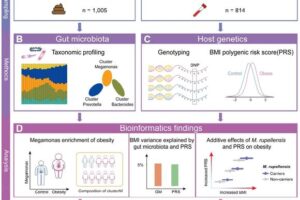
Figure S1. Study design, data analysis and experimental strategy for linking the human gut microbiota, genetics, and obesity. Related to STAR Methods. (A) Basic information of a Chinese obese cohort (n = 1,005). (B) Shotgun metagenomic sequencing and taxonomic profiling analysis on 1,005 collected fecal samples. (C) Whole genome sequencing conducted on 814 collected blood samples, and the calculation of polygenic risk score (PRS) for BMI based on BMI-associated common variants. (D) Identification of obesity-enriched microbial taxa, and assessment of the impacts of gut microbiota and host genetics on obesity. (E) Experimental design of functional examination of M. rupellensis and E. coli with heterologous expression of a myo-inositol-degrading enzyme in vitro and in vivo.

Megamonas bacterium found to influence obesity risk

A genetic diagnostic method using a small sample of skin from the upper arm could identify rare neurodevelopmental disorders in a non-invasive way, according to researchers at the University of Adelaide.

Skin may hold key to neurodevelopmental disorder diagnosis

DNA strand

Maternal vs Paternal X-Chromosomes: New Study Reveals Unexpected Tissue Preferences

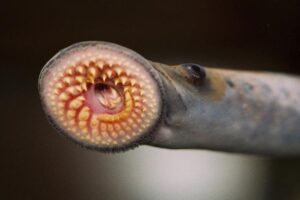
One of just two vertebrates without a jaw, sea lampreys that are wreaking havoc in Midwestern fisheries are simultaneously helping scientists understand the origins of two important stem cells.

Jawless Lampreys Reveal Ancient Secrets of Vertebrate Evolution

The new DNA test means there is no reason why another English Shepherd Dog ever needs to be born with progressive retinal atrophy, which causes total blindness.

New genetic test should eliminate a form of inherited blindness in dogs

African American man

Living in Disadvantaged Neighborhoods May Contribute to Aggressive Prostate Cancer in African American Men


Abstract illustration of the human body, DNA and metabolism

New Discovery Platform Unlocks Secrets of Metabolic Genes, Reveals Key Choline Transporter

Teenage girl

Genetic Study Reveals Complex Links Between Weight Gain and Early Puberty in Girls

Blood samples

Blood Variant Linked to Obesity and New Discovery Could Guide Treatment

Older posts
Newer posts
← Previous Page1 Page2 Page3 … Page9 Next →
Substack subscription form sign up

Comments

  • James on Global warming reduces available wind energy
  • Booklet AI on Key to online education: Test early and often
  • Karoly Mirnics on Common Prescription Drugs May Disrupt Cholesterol Pathways in the Womb and Raise Autism Risk
  • Aizen on Laziness helped lead to extinction of Homo erectus
  • Norwood johnson on Electrons in New Crystals Behave as If They Live in Four Dimensions
© 2026 ScienceBlog.com | Follow our RSS / XML feed