Skip to content
ScienceBlog.com
  • Featured Blogs
    • EU Horizon Blog
    • ESA Tracker
    • Experimental Frontiers
    • Josh Mitteldorf’s Aging Matters
    • Dr. Lu Zhang’s Gondwanaland
    • NeuroEdge
    • NIAAA
    • SciChi
    • The Poetry of Science
    • Wild Science
  • Topics
    • Brain & Behavior
    • Earth, Energy & Environment
    • Health
    • Life & Non-humans
    • Physics & Mathematics
    • Social Sciences
    • Space
    • Technology
  • Our Substack
  • Follow Us!
    • Bluesky
    • Threads
    • FaceBook
    • Google News
    • Twitter/X
  • Contribute/Contact

genetics

Microglia illustration

Unlocking the Role of Human Microglia in Alzheimer’s Disease

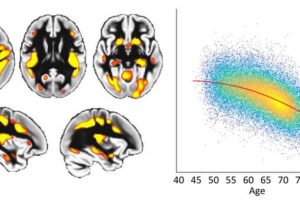
Image caption: To the left of the figure, the red-yellow colour denotes the regions that degenerate earlier than the rest of the brain, and are vulnerable to Alzheimer’s disease. These brain areas are higher-order regions that process and combine information coming from our different senses. To the right of the figure, each dot represents the brain data from one UK Biobank participant. The overall curve shows that, in these particularly fragile regions of the brain, there is accelerated degeneration with age. Credit: G. Douaud and J. Manuello.

Researchers Identify Top Dementia Risk Factors

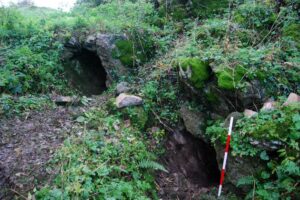
Killuragh Cave, County Limerick, Ireland.

Unearthing Ancient Dental Secrets: How Our Ancestors’ Mouths Differed from Our Own

DNA strands made of burning embers and smoke

How DNA Influences How Much You’ll Smoke

A Black woman with Alzheimer's

Study Identifies Genetic Variants Linked to Alzheimer’s Disease Risk

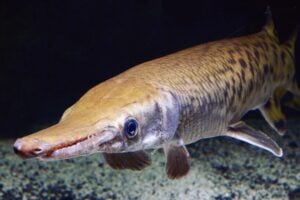
The alligator gar, and other gar species, are “living fossils” that it shows little species diversity or physical differences from ancestors that lived tens of millions of years ago. (Photo by Solomon David)

How ‘Living Fossils’ Like Gars Persist Over Millions of Years

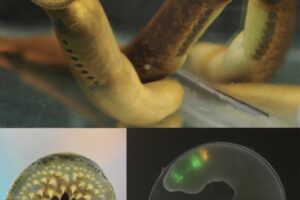
Top and left images are adult sea lampreys. On the right is a fluorescence microscopy image of a developing sea lamprey embryo.

An awkward family reunion: Sea monsters are our cousins

Ohio State logo

Imageomics poised to enable new understanding of life

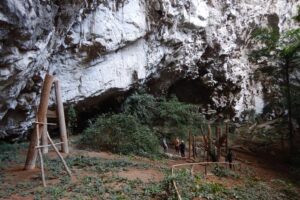
Caves and rock shelters dot the mountains in the northwestern highlands of Thailand. Over 40 in Mae Hong Son province contain wooden coffins on stilts, dating back 1,000 - 2,300 years.

Ancient Whispers from the Coffins: DNA Unravels Secrets of Thailand’s Iron Age People

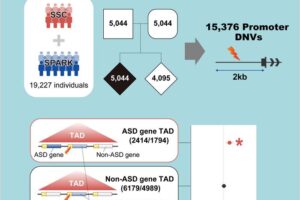
In this study, researchers analyzed large ASD whole genome sequencing data and found that promoter de novo mutations in TADs containing ASD genes were specifically associated with the disease.

Genomic “butterfly effect” explains risk for autism spectrum disorder

mitichondria

How obesity dismantles our mitochondria

plate of healthy looking food

Why protein-poor diet during pregnancy increases risk of prostate cancer in offspring

Skeleton at the site in Jubuicabeira II, Brazil.

Syphilis-like diseases were already widespread in America before the arrival of Columbus

illustration of neurons

Researchers propose a new model for classifying Parkinson’s

Older posts
Newer posts
← Previous Page1 … Page3 Page4 Page5 … Page9 Next →
Substack subscription form sign up

Comments

  • Kidreadytobreed on Global warming reduces available wind energy
  • James on Global warming reduces available wind energy
  • James on Global warming reduces available wind energy
  • Booklet AI on Key to online education: Test early and often
  • Karoly Mirnics on Common Prescription Drugs May Disrupt Cholesterol Pathways in the Womb and Raise Autism Risk
© 2026 ScienceBlog.com | Follow our RSS / XML feed