Skip to content
ScienceBlog.com
  • Featured Blogs
    • EU Horizon Blog
    • ESA Tracker
    • Experimental Frontiers
    • Josh Mitteldorf’s Aging Matters
    • Dr. Lu Zhang’s Gondwanaland
    • NeuroEdge
    • NIAAA
    • SciChi
    • The Poetry of Science
    • Wild Science
  • Topics
    • Brain & Behavior
    • Earth, Energy & Environment
    • Health
    • Life & Non-humans
    • Physics & Mathematics
    • Social Sciences
    • Space
    • Technology
  • Our Substack
  • Follow Us!
    • Bluesky
    • Threads
    • FaceBook
    • Google News
    • Twitter/X
  • Contribute/Contact

global warming

Fish drying on a line

Low-income countries could lose 30% of nutrients from seafood due to climate change

Artic ice. Pixabay

Increased West Antarctic Ice Sheet melting ‘unavoidable’

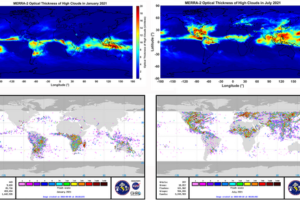
Comparison between the global cloud optical thicknesses of high clouds and global ISS-LIS lightning flashes for one of the months of northern hemisphere summer July (2021) and southern hemisphere summer January (2021).

Rise in global thunderstorm activity might increase the quantity of wispy cirrus clouds – accelerating global warming

Snowy woods.Pixabay

Blowing snow contributes to Arctic warming

heat artwork

The Heat is On

Coral reef islands are losing the battle with sea-level rise, as exemplified by Beneamina, Solomon Islands, in the Pacific Ocean. Photo by Simon Albert.

World’s coastal wetlands and coral reef islands are hanging by a thread, new study shows

Penguins and a seal on the Antarctic Peninsula

Antarctic extremes ‘virtually certain’ as world warms

Cracked soil

Empty Echoes of Rain

Dartmouth researchers say a spike in home runs since 2010 is partly due to warmer, thinner air caused by global warming. Wrigley Field in Chicago is projected to be the most affected stadium in the future. (Photo by Mike Janes/Four Seam Images via AP)

Spike in major league home runs tied to climate change

Desert heat

Limiting warming to 2°C may avoid 80% of heat-related deaths in Middle East and North Africa

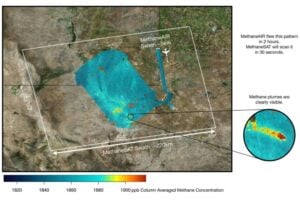
More precise than other methane-sensing satellites, MethaneSAT will allow scientists to track emissions to their sources and provide key data for reduction efforts. It is scheduled to launch early next year. Courtesy of Steven Wofsy

Methane-tracking satellite may be fastest way to slow climate change

Satellite data from 30 years of observations is helping researchers tease apart natural and human-caused drivers of sea level rise. The information will help planners in regions like New Orleans, Louisiana, along the U.S. Gulf Coast to prepare for the future. Credit: NASA

NASA Uses 30-Year Satellite Record to Track and Project Rising Seas

Clouds in the sky provide new clues to predicting climate change

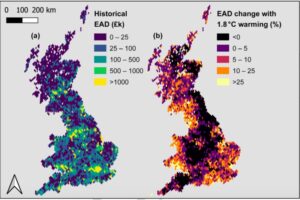
Historical expected annual damage (EAD) in GBP billion at 2020 values, and calculated EAD percentage increase with 1.8 degrees global warming.

Flood risks can still be considerably reduced if all global promises to cut carbon emissions are kept

Older posts
Newer posts
← Previous Page1 Page2 Page3 Page4 Next →
Substack subscription form sign up

Comments

  • Monte Dale Jr on Cracks Are Appearing in the Geometric Assumption Underlying All of Modern Cosmology
  • Monte Dale Jr on Cracks Are Appearing in the Geometric Assumption Underlying All of Modern Cosmology
  • Yehuda on A Pill That Keeps Your Throat Awake Could Transform Sleep Apnea Treatment
  • Jeffrey Erle Cunha on Cracks Are Appearing in the Geometric Assumption Underlying All of Modern Cosmology
  • Monte Dale Jr on Cracks Are Appearing in the Geometric Assumption Underlying All of Modern Cosmology
© 2026 ScienceBlog.com | Follow our RSS / XML feed