Skip to content
ScienceBlog.com
  • Featured Blogs
    • EU Horizon Blog
    • ESA Tracker
    • Experimental Frontiers
    • Josh Mitteldorf’s Aging Matters
    • Dr. Lu Zhang’s Gondwanaland
    • NeuroEdge
    • NIAAA
    • SciChi
    • The Poetry of Science
    • Wild Science
  • Topics
    • Brain & Behavior
    • Earth, Energy & Environment
    • Health
    • Life & Non-humans
    • Physics & Mathematics
    • Social Sciences
    • Space
    • Technology
  • Our Substack
  • Follow Us!
    • Bluesky
    • Threads
    • FaceBook
    • Google News
    • Twitter/X
  • Contribute/Contact

greenhouse gas emissions

The wealthiest 10% of Americans are responsible for 40% of the nation’s total greenhouse gas emissions.

America’s wealthiest 10% responsible for 40% of US greenhouse gas emissions

New tech for old buildings means gains for the wallet and climate

Illustration of bubbles of methane on surface of catalyst.

New catalyst could dramatically cut methane pollution from millions of engines

Photo of emissions from a factory. Pixaby

Easy win: Tackling Nitrous Oxide Emissions for a Sustainable Future

Artic ice. Pixabay

Arctic Sea Ice Could Vanish by the 2030s, Decade Earlier Than Projected

Solar panels on an industrial rooftop

Solar roofs could power 1/3 of US manufacturing

Farm

To more effectively sequester biomass and carbon, just add salt

Research shows how data and staff expertise play a vital role in ensuring sustainable buildings deliver on their promise to put clean energy back into the grid

Canada’s first zero-carbon, net-positive energy building is on track to propel energy transition

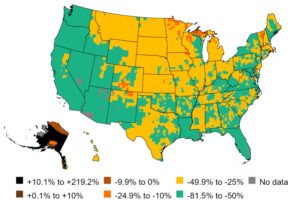
Map of percentage change in transportation energy burden from current on-road vehicle stock to a new battery-electric vehicle. Negative percentages indicate energy cost savings for EVs compared to gasoline powered vehicles. Areas with the greatest savings, shown in green, include the West Coast states and parts of the East and South. Transportation energy burden is the percentage of household income spent on fueling with gasoline or charging with electricity. Adapted from Vega-Perkins et al. in Environmental Research Letters, January 2023.

EV transition will benefit most US vehicle owners, but lowest-income Americans could get left behind

MIT researchers determined that 1 billion autonomous vehicles, each driving for one hour per day with a computer consuming 840 watts, would consume enough energy to generate about the same amount of emissions as data centers currently do. Credits:Image: Christine Daniloff, MIT

Car computers could run over environment

Heavy-duty trucks drive clean hydrogen to the next level

New lakes popping up all over, and that’s not necessarily good

Newer posts
← Previous Page1 Page2
Substack subscription form sign up

Comments

  • Karoly Mirnics on Common Prescription Drugs May Disrupt Cholesterol Pathways in the Womb and Raise Autism Risk
  • Aizen on Laziness helped lead to extinction of Homo erectus
  • Norwood johnson on Electrons in New Crystals Behave as If They Live in Four Dimensions
  • ScienceBlog.com on Hidden Geometry Could Finally Fix Quantum Computers
  • Theo Prinse on America Is Going Back to the Moon. This Time, It Plans to Stay
© 2026 ScienceBlog.com | Follow our RSS / XML feed