Skip to content
ScienceBlog.com
  • Featured Blogs
    • EU Horizon Blog
    • ESA Tracker
    • Experimental Frontiers
    • Josh Mitteldorf’s Aging Matters
    • Dr. Lu Zhang’s Gondwanaland
    • NeuroEdge
    • NIAAA
    • SciChi
    • The Poetry of Science
    • Wild Science
  • Topics
    • Brain & Behavior
    • Earth, Energy & Environment
    • Health
    • Life & Non-humans
    • Physics & Mathematics
    • Social Sciences
    • Space
    • Technology
  • Our Substack
  • Follow Us!
    • Bluesky
    • Threads
    • FaceBook
    • Google News
    • Twitter/X
  • Contribute/Contact

Health Research

illustration of gut bacteria

Discrimination’s Hidden Impact: Study Reveals Distinct Changes in Gut Bacteria

Man and woman working out next to each other

Study Reveals Surprising Sex Differences in Fat Metabolism

High hopes: the quest to turn cannabis into a potent medicine

Feijoa fruit

Humble feijoa to help prevent type 2 diabetes

Pendant tracks heat signatures from lit cigarettes in real time

Smart necklace aims to help you stop smoking

Baby foods take centre stage in push for more safety and quality

Blood pressure cuff and pills

Revolutionary 10-minute scan detects and helps cure leading cause of hypertension

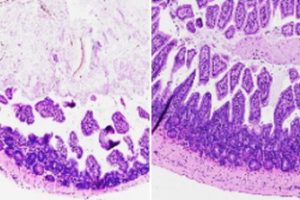
Salk researchers discovered the compound FexD can treat intestinal inflammation in mice. Mice with symptoms similar to inflammatory bowel disease had changes to the cells lining their intestines (left) that were reversed with treatment (right).

Compound reverses gut inflammation in mice

Bowl of peanuts

Peanuts and herbs and spices may positively impact gut microbiome

Substack subscription form sign up

Comments

  • Karoly Mirnics on Common Prescription Drugs May Disrupt Cholesterol Pathways in the Womb and Raise Autism Risk
  • Aizen on Laziness helped lead to extinction of Homo erectus
  • Norwood johnson on Electrons in New Crystals Behave as If They Live in Four Dimensions
  • ScienceBlog.com on Hidden Geometry Could Finally Fix Quantum Computers
  • Theo Prinse on America Is Going Back to the Moon. This Time, It Plans to Stay
© 2026 ScienceBlog.com | Follow our RSS / XML feed