Skip to content
ScienceBlog.com
  • Featured Blogs
    • EU Horizon Blog
    • ESA Tracker
    • Experimental Frontiers
    • Josh Mitteldorf’s Aging Matters
    • Dr. Lu Zhang’s Gondwanaland
    • NeuroEdge
    • NIAAA
    • SciChi
    • The Poetry of Science
    • Wild Science
  • Topics
    • Brain & Behavior
    • Earth, Energy & Environment
    • Health
    • Life & Non-humans
    • Physics & Mathematics
    • Social Sciences
    • Space
    • Technology
  • Our Substack
  • Follow Us!
    • Bluesky
    • Threads
    • FaceBook
    • Google News
    • Twitter/X
  • Contribute/Contact

human health

coastline

Coastal Microplastics Linked to Higher Disability Rates

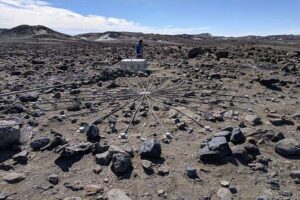
This infrasound monitoring station located in Antarctica is one of sixty such stations in the CTBT network designed to monitor secret nuclear tests.

The Silent Sound That Circles the Earth: Unlocking the Mysteries of Infrasound

inside the gut illustration with microbes floating around

Time of Day Crucial for Gut Microbiome Research, Study Reveals

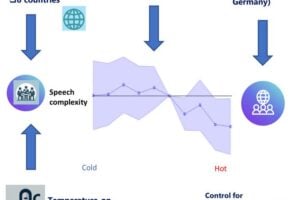
The effect of temperature on language complexity: Evidence from seven million parliamentary speeches

Parliamentary members use simpler language on hot days

picture of ai helping a woman overcome loneliness

Artificial Intelligence could help cure loneliness

A digital illustration of a nest with eggs and a baby bird, surrounded by sound waves representing traffic noise

Traffic Noise Exposure in Eggs and Nesting Birds Leads to Lifelong Fitness Reduction

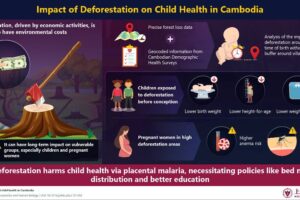
Infographic on deforestation impacts on child health in Cambodia

Vanishing forests and suffering children: The hidden toll of deforestation in Cambodia

A health fanatic guzzling chia seeds

New study eyes nutrition-rich chia seed for potential to improve human health

Emily C. Gentry, PhD

New method finds biomarker for inflammatory bowel disease

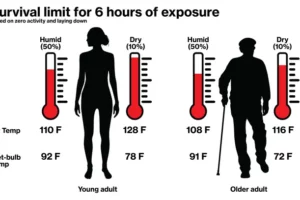
Air temperature survival limits are greatly reduced in humid heat, and more so for older adults. The corresponding wet-bulb temperatures in dry weather are dramatically lower than the previously assumed limit of 95F or 35C. A wet bulb temperature of only 78F on a dry Phoenix summer day would be considered unsurvivable, yet it would take air temperatures of 128F under 10% relative humidity to reach that limit.

New research explores future limits of survival and livability in extreme heat conditions

Open-heart surgery. Pixabay

Microplastics found in human heart tissues, both before and after surgical procedures

Bacteria

Gut microbiome fluctuates throughout the day and across seasons

New research finds there is significant variation in the anatomy of the human digestive system, with pronounced differences possible between healthy individuals. The finding has implications for understanding the role that the digestive tract’s anatomy can play in affecting human health, as well as providing potential insights into medical diagnoses and the microbial ecosystem of the gut. In this photo, a researcher takes a gut measurement in the lab.

Study finds significant variation in anatomy of human guts

Plate with thin slices of vegetable

Calorie restriction slows pace of aging in healthy adults

Substack subscription form sign up

Comments

  • Norwood johnson on Electrons in New Crystals Behave as If They Live in Four Dimensions
  • ScienceBlog.com on Hidden Geometry Could Finally Fix Quantum Computers
  • Theo Prinse on America Is Going Back to the Moon. This Time, It Plans to Stay
  • george w on Hidden Geometry Could Finally Fix Quantum Computers
  • Tom Hughes on Years of Exercise, Blood Pressure Drugs Failed to Slow Cognitive Decline in Seniors at Dementia Risk
© 2026 ScienceBlog.com | Follow our RSS / XML feed