Skip to content
ScienceBlog.com
  • Featured Blogs
    • EU Horizon Blog
    • ESA Tracker
    • Experimental Frontiers
    • Josh Mitteldorf’s Aging Matters
    • Dr. Lu Zhang’s Gondwanaland
    • NeuroEdge
    • NIAAA
    • SciChi
    • The Poetry of Science
    • Wild Science
  • Topics
    • Brain & Behavior
    • Earth, Energy & Environment
    • Health
    • Life & Non-humans
    • Physics & Mathematics
    • Social Sciences
    • Space
    • Technology
  • Our Substack
  • Follow Us!
    • Bluesky
    • Threads
    • FaceBook
    • Google News
    • Twitter/X
  • Contribute/Contact

Immunology

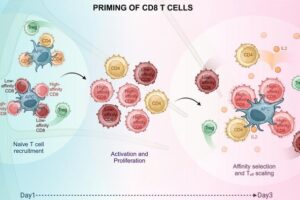
CD8 T cell priming occurs in two phases. In the activation phase (day 1), naïve T cells engage with dendritic cells (DC) for 24 hours, then detach, proliferate, and move deeper into the lymph node. In the selection phase (days 2-3), activated T cells regain sensitivity, re-engage with antigen-presenting cells, and receive IL-2 support from CD4 T cells. Regulatory T cells limit IL-2 availability, driving the expansion and differentiation of high-affinity CD8 T cells into effector cells.

Hidden Dance of T-Cells Reveals New Immune System Strategy Against Viruses

MIT scientists find the protein IL-17 that fights infection also acts on two distinct brain regions — the amygdala and the somatosensory cortex — inducing anxiety or sociability. Credits:Image: MIT News; iStock

Molecules that fight infection also act on the brain, inducing anxiety or sociability

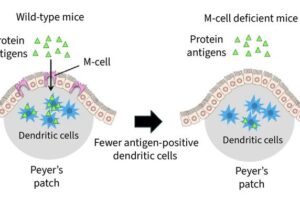
When protein antigens are injected into the small intestine of wild-type mice, they are passed to dendritic cells in the Peyer's patches; similar experiments in M-cell-deficient mice result in fewer dendritic cells receiving the protein antigen.

Food Antigens Suppress Tumor Growth in Small Intestine, Study Finds

Lungs

Existing Arthritis Drugs May Treat Long-Term COVID Lung Damage

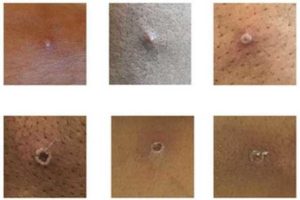
Photos of monkeypox in British patients, May 2022

New mRNA Vaccine Outperforms Current Options in Mpox Battle

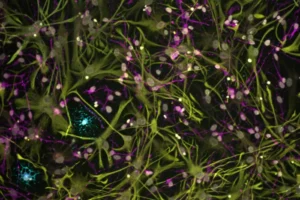
Glia-enriched cultures from a primary progressive multiple sclerosis iPSC line showing astrocytes (yellow), oligodendrocytes (cyan), and neurons (magenta)

Stem Cell Models Uncover Crucial Role of Brain Cells in Multiple Sclerosis

Artistic illustration of a human brain. Pixabay

Multiple sclerosis appears to protect against Alzheimer’s disease

Reminiscent of a Halloween pumpkin, this collection of dots shows cells forming part of the thymus.

Unlocking the Secrets of Our Aging Immune System: New Insights into Thymus Decline

Research explains why virus causing cold sores does not spread to devastating brain infection

Research explains why virus causing cold sores does not spread to devastating brain infection

Northwestern Medicine and Brigham and Women’s Hospital scientists have discovered a molecular defect that promotes the pathologic immune response in lupus and show that reversing this defect may potentially reverse the disease. Getty Images

Scientists Uncover a Root Cause and Potential Cure for Lupus

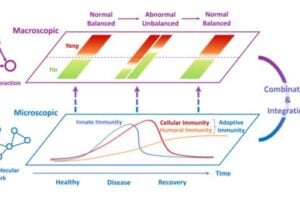
Immune States: Integrating Traditional Chinese Medicine and Modern Medicine for a Holistic View of Immunity

New ‘Immune State’ Theory Blends Ancient Wisdom with Modern Medicine

An overactive immune response can result in autoimmune diseases including inflammatory bowel disease, psoriasis, rheumatoid arthritis and multiple sclerosis.

Putting the brakes on chronic inflammation

A section of a mouse juvenile brain (cerebral cortex) showing cell nuclei (blue), microglia (red) and the activation of a specific gene called Hes1 (white).

Harvard Study Reveals Maternal Immune Response Impacts Fetal Brain Development, Linked to Autism Risk

Child with measles

Caesarean Births Linked to Reduced Measles Vaccine Effectiveness, Study Finds

Older posts
Page1 Page2 … Page4 Next →
Substack subscription form sign up

Comments

  • Monte Dale Jr on Cracks Are Appearing in the Geometric Assumption Underlying All of Modern Cosmology
  • Monte Dale Jr on Cracks Are Appearing in the Geometric Assumption Underlying All of Modern Cosmology
  • Not Buying Yer Bullshit on More Than a Third of Americans Have Lost Relationships Over Politics
  • Marco Messina on More Than a Third of Americans Have Lost Relationships Over Politics
  • Anon on Why Fructose Behaves Less Like a Calorie and More Like a Hormone
© 2026 ScienceBlog.com | Follow our RSS / XML feed