Skip to content
ScienceBlog.com
  • Featured Blogs
    • EU Horizon Blog
    • ESA Tracker
    • Experimental Frontiers
    • Josh Mitteldorf’s Aging Matters
    • Dr. Lu Zhang’s Gondwanaland
    • NeuroEdge
    • NIAAA
    • SciChi
    • The Poetry of Science
    • Wild Science
  • Topics
    • Brain & Behavior
    • Earth, Energy & Environment
    • Health
    • Life & Non-humans
    • Physics & Mathematics
    • Social Sciences
    • Space
    • Technology
  • Our Substack
  • Follow Us!
    • Bluesky
    • Threads
    • FaceBook
    • Google News
    • Twitter/X
  • Contribute/Contact

innovation

good idea illustration

Identifying what keeps a good idea down

Boy skateboatrding in an empty, suburban swimming pool

How California’s Dry Spell Birthed the Skateboarding Phenomenon in the 1970s

As microscopic materials proliferate, ensuring they are safe is a priority

From rockets to spider silk, young scientists wow the jury – and each other!

Alexz Farrall and his PAWS 'breathing' ball

Breathe! The shape-shifting ball that supports mental health

Restoring sight to the blind with cutting-edge brain implants

In a groundbreaking research paper co-authored by MIT economist Martin Beraja, it's revealed how China's escalated investments in AI-powered facial recognition technology serve a dual purpose: assisting the government in curbing dissent while simultaneously propelling technological advancements. This symbiotic scenario is termed as an "AI-Tocracy" by the authors of the paper. Image Credits: Jose-Luis Olivares/MIT with figures from iStock.

MIT Study Reveals How AI Helps China’s Authoritarian Regime Stay in Control

Paper makers and users look to greener frontiers

A sample of LionGlass, a new type of glass engineered by researchers at Penn State that requires significantly less energy to produce and is much more damage resistant than standard soda lime silicate glass. Credit: Adrienne Berard / Penn State. Creative Commons

New glass cuts carbon footprint by nearly half and is 10x more damage resistant

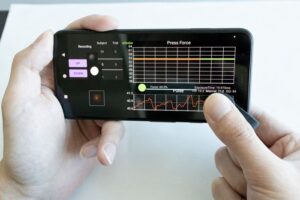
Prototype of the blood pressure monitoring clip. The user presses on the clip and a custom smartphone app guides the user on how hard and long to press during the measurement.

Engineers Turn Smartphones into 80-cent Blood Pressure Clinics

Robot assistants in the operating room promise safer surgery

From food on Mars to curbs on plastics, young scientists show power of their spirit and intellect

Ohio State logo

2 health sciences professors named fellows of the National Academy of Inventors

Futuristic fields: Europe’s farm industry on cusp of robot revolution

Newer posts
← Previous Page1 Page2
Substack subscription form sign up

Comments

  • Norwood johnson on Electrons in New Crystals Behave as If They Live in Four Dimensions
  • ScienceBlog.com on Hidden Geometry Could Finally Fix Quantum Computers
  • Theo Prinse on America Is Going Back to the Moon. This Time, It Plans to Stay
  • george w on Hidden Geometry Could Finally Fix Quantum Computers
  • Tom Hughes on Years of Exercise, Blood Pressure Drugs Failed to Slow Cognitive Decline in Seniors at Dementia Risk
© 2026 ScienceBlog.com | Follow our RSS / XML feed