Skip to content
ScienceBlog.com
  • Featured Blogs
    • EU Horizon Blog
    • ESA Tracker
    • Experimental Frontiers
    • Josh Mitteldorf’s Aging Matters
    • Dr. Lu Zhang’s Gondwanaland
    • NeuroEdge
    • NIAAA
    • SciChi
    • The Poetry of Science
    • Wild Science
  • Topics
    • Brain & Behavior
    • Earth, Energy & Environment
    • Health
    • Life & Non-humans
    • Physics & Mathematics
    • Social Sciences
    • Space
    • Technology
  • Our Substack
  • Follow Us!
    • Bluesky
    • Threads
    • FaceBook
    • Google News
    • Twitter/X
  • Contribute/Contact

insects

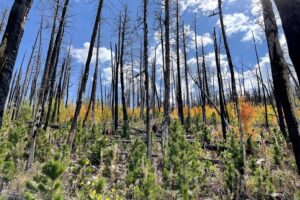
Nine years after the 2012 High Park Fire burned a stand of lodgepole pine that had been severely affected by the mountain pine beetle, lodgepole and aspen saplings were rebounding on this slope in the Arapaho and Roosevelt National Forests. A CSU-led study has found that forests are not regenerating fast enough to keep pace with climate change, wildfire, insects and disease. Photo by Katie Nigro, September 2021

Trees might need our help to survive climate change

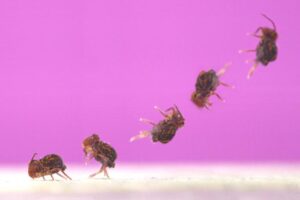
Composite image of a globular springtail jumping. Credit Adrian Smith

Tiny Backyard Bug Performs World’s Fastest Backflips

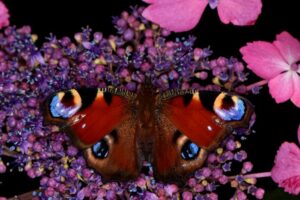
Peacock butterfly

Butterflies accumulate enough static electricity to attract pollen without contact

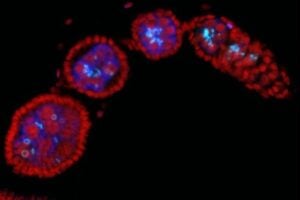
A mei-P26 mutant Drosophila melanogaster ovariole infected with wMel bacterial symbionts. DNA is stained in red, anti-Vasa protein is stained blue, and anti-Hu-li tai shao ring canal protein is stained cyan.

Bacteria can enhance host insect’s fertility

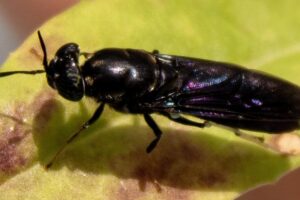
Black soldier flies are a good source of chemicals to make bioplastics.

Making degradable plastic from dead flies

Photo credit: Michael L. Smith

Bees and Wasps Independently Invent Ingenious Nest-Building Solutions

Farmer ants and drama-prone wasps in spotlight for their climate adaptation

Moths in a case

Blossom at Night: Science Poetry Friday

Facing external threats, bees may get help from internal organisms

Bee flying mid-air

Buzzworthy Research Suggests Insect Brains May Help Us Understand Our Own

Sea skater Taken in the Zoologische Staatssammlung München Halobates keyanus; Eschscholtz, 1822; Meerwasserläufer

Insects Shun Sea Life, Prefer Land’s Oxygen Buffet

Substack subscription form sign up

Comments

  • Karoly Mirnics on Common Prescription Drugs May Disrupt Cholesterol Pathways in the Womb and Raise Autism Risk
  • Aizen on Laziness helped lead to extinction of Homo erectus
  • Norwood johnson on Electrons in New Crystals Behave as If They Live in Four Dimensions
  • ScienceBlog.com on Hidden Geometry Could Finally Fix Quantum Computers
  • Theo Prinse on America Is Going Back to the Moon. This Time, It Plans to Stay
© 2026 ScienceBlog.com | Follow our RSS / XML feed