

Skip to content
ScienceBlog.com
  • Featured Blogs
    • EU Horizon Blog
    • ESA Tracker
    • Experimental Frontiers
    • Josh Mitteldorf’s Aging Matters
    • Dr. Lu Zhang’s Gondwanaland
    • NeuroEdge
    • NIAAA
    • SciChi
    • The Poetry of Science
    • Wild Science
  • Topics
    • Brain & Behavior
    • Earth, Energy & Environment
    • Health
    • Life & Non-humans
    • Physics & Mathematics
    • Social Sciences
    • Space
    • Technology
  • Our Substack
  • Follow Us!
    • Bluesky
    • Threads
    • FaceBook
    • Google News
    • Twitter/X
  • Contribute/Contact

invasive species

Life cycle of the introduced trematode Dollfustrema invadens in Japan. Illustration: Iwata Sho, Makito Hayashi and Tsukasa Waki

Foreign Parasite Infiltrates Japan’s Waterways

Sooty terns and other seabird species flying above a remote atoll island where rats are not present

Restoring Rat-Free Islands Could Boost Seabird Populations and Coral Reef Health

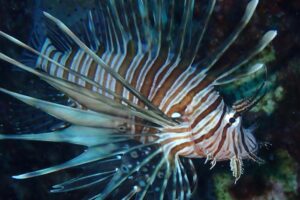
Lionfish

Invasive Lionfish Rapidly Spreading in Mediterranean, Threatening Biodiversity

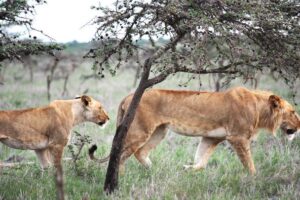
The lion in East Africa changes hunting habits due to tiny ant species

Tiny ant species disrupts lion’s hunting behavior

crab eating macaque monkey

Crab-eating monkey one of Florida’s greatest threats to ecosystems, human health

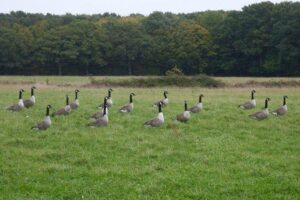
Flock of Canada geese

Geese ‘keep calm and carry on’ after deaths in the flock

Ohio State logo

An exotic tick that can kill cattle is spreading across Ohio

Asian hornets

Bumblebees drop to shake off Asian hornets

Spotted lanternflies have piercing/sucking mouthparts that they use to suck the phloem sap out of plants.

Invasive spotted lanternfly may not damage hardwood trees as previously thought

lanternfly

Hardwood Trees in the U.S. Less Vulnerable to Spotted Lanternfly Than Feared

A honey bee visits a white sage plant. Researchers have shown that pollination by honey bees, which are not native to the Americas, produces offspring of considerably inferior quality (lower fitness) than offspring resulting from native pollinators.

Plants pollinated by honey bees produce lower-quality offspring

Researchers from UC San Diego have found that honey bees, which are non-native to the Americas, produce plant offspring of lower quality compared to native pollinators in the San Diego region. Honey bees tend to visit more flowers on a single plant, leading to self-pollination and reduced fitness of the resulting plant offspring. This study highlights the importance of native pollinators for the preservation of native plant species in the face of invasive plant species and emphasizes the need for conservation efforts focused on native plants and bees.

A male yellow crazy ant (Anoplolepis gracilipes)

Male yellow crazy ants are real-life chimeras

Green shrubs

Weeding the Knots

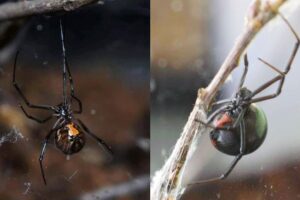
Black widow spiders have earned a fearsome reputation for their venomous bite. But in parts of the southern United States these spiders have much to fear themselves—from spider relatives who really don't like their company. In the past couple decades, researchers have noticed black widow spiders (adult female shown at right) commonly being displaced by the brown widow (adult female at left), a fellow species in the same genus, Latrodectus. But new research suggests this isn't a just simple case of one species winning the competition for food or habitat. Instead, a study shows brown widow spiders have a striking propensity to seek out and kill nearby black widows. (Note: Images are not shown to matching scale and thus do not reflect relative sizes of the two spiders.)

Brown widow spiders’ aggression likely driver of black widow decline

Older posts
Page1 Page2 Next →
Substack subscription form sign up

Comments

  • Karoly Mirnics on Common Prescription Drugs May Disrupt Cholesterol Pathways in the Womb and Raise Autism Risk
  • Aizen on Laziness helped lead to extinction of Homo erectus
  • Norwood johnson on Electrons in New Crystals Behave as If They Live in Four Dimensions
  • ScienceBlog.com on Hidden Geometry Could Finally Fix Quantum Computers
  • Theo Prinse on America Is Going Back to the Moon. This Time, It Plans to Stay
© 2026 ScienceBlog.com | Follow our RSS / XML feed