Skip to content
ScienceBlog.com
  • Featured Blogs
    • EU Horizon Blog
    • ESA Tracker
    • Experimental Frontiers
    • Josh Mitteldorf’s Aging Matters
    • Dr. Lu Zhang’s Gondwanaland
    • NeuroEdge
    • NIAAA
    • SciChi
    • The Poetry of Science
    • Wild Science
  • Topics
    • Brain & Behavior
    • Earth, Energy & Environment
    • Health
    • Life & Non-humans
    • Physics & Mathematics
    • Social Sciences
    • Space
    • Technology
  • Our Substack
  • Follow Us!
    • Bluesky
    • Threads
    • FaceBook
    • Google News
    • Twitter/X
  • Contribute/Contact

lung cancer

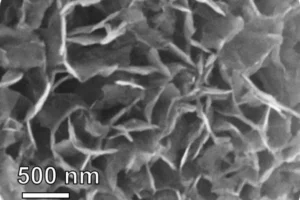
These nanoflakes show promise in detecting lung cancer by sensing a change in breath chemistry.

Breakthrough Sensor Could Detect Lung Cancer Through a Simple Breath Test

Xiuning Le, M.D., Ph.D., The University of Texas MD Anderson Cancer Center, Houston

New Drug Shows Promise for Hard-to-Treat Lung Cancer Patients

Ashtray with cigarette butts

Study Links Smoking to DNA Changes in Six Ethnic Groups

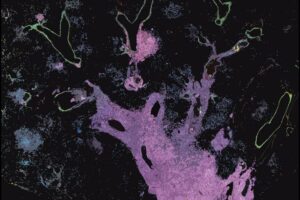
Researchers catch lung cancer transformation in the act: Immunofluorescence image shows small cell lung cancer (purple-pink) spreading throughout the bronchioles (green) of a mouse lung containing residual lung adenocarcinoma tumor cells (blue). CREDIT Dr. Eric Gardner, Varmus Lab

How one type of lung cancer can transform into another

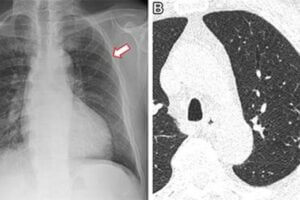
Frontal chest X-ray shows a small nodular opacity (arrow) in the left upper lung zone. Axial, non-contrast, low-dose chest CT scan shows a 9-mm solid nodule (arrow) in the left upper lobe.

AI identifies non-smokers at high risk for lung cancer

Nathan Harrison, Flinders University, in Australia

Stigmatization of smoking-related diseases is a barrier to care and the problem may be on the rise

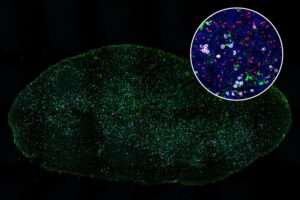
A new MIT study explains why dendritic cells (green) in lymph nodes that drain from the lungs fail to stimulate killer T cells (white) to attack lung tumors. Credits:Courtesy of the researchers

Why lung cancer doesn’t respond well to immunotherapy

Jar of green juice

Sarunashi juice inhibits lung cancer in mice

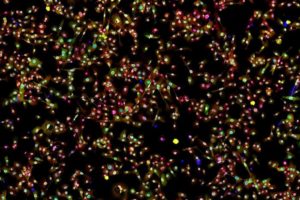
Fluorescence microscopy image of lung cancer cells stained with antibodies against proteins involved in cellular growth.

Bacteria can help treat lung cancer

Substack subscription form sign up

Comments

  • David A on Why You’re Losing Muscle on Weight Loss Drugs, and What a Gut Hormone Might Do About It
  • Marco Messina on More Than a Third of Americans Have Lost Relationships Over Politics
  • Anon on Why Fructose Behaves Less Like a Calorie and More Like a Hormone
  • Mark Mellinger on Living Plastic Can Self-Destruct on Command
  • Marie Feret on The Silent Frequency That Makes Old Buildings Feel Haunted
© 2026 ScienceBlog.com | Follow our RSS / XML feed