Skip to content
ScienceBlog.com
  • Featured Blogs
    • EU Horizon Blog
    • ESA Tracker
    • Experimental Frontiers
    • Josh Mitteldorf’s Aging Matters
    • Dr. Lu Zhang’s Gondwanaland
    • NeuroEdge
    • NIAAA
    • SciChi
    • The Poetry of Science
    • Wild Science
  • Topics
    • Brain & Behavior
    • Earth, Energy & Environment
    • Health
    • Life & Non-humans
    • Physics & Mathematics
    • Social Sciences
    • Space
    • Technology
  • Our Substack
  • Follow Us!
    • Bluesky
    • Threads
    • FaceBook
    • Google News
    • Twitter/X
  • Contribute/Contact

macrophages

A very small baby

Why babies recover, but adults scar, after heart damage

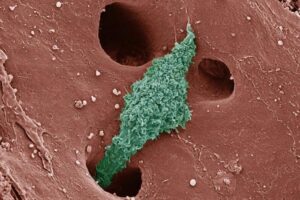
A colorized scanning electron micrograph depicts a Kupffer cell. These immune system cells reside only in the liver, protecting other cells by detecting and removing foreign debris, dead cells and pathogens. They also pay a role in the metabolism of many different compounds, including lipids and protein complexes.

Macrophage mix helps determine rate and fate of fatty liver disease

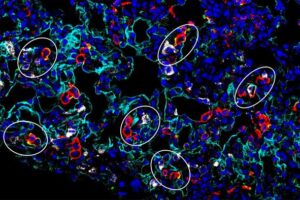
Following infection, in areas of the lung undergoing repair, atypical macrophages (in orange) are located close to type 2 alveolar cells (in white).

Newly Discovered Lung Macrophages Key to Post-Viral Recovery

Illustration of a human body without skin

Study finds new treatment to reverse inflammation and arterial blockages in rheumatoid arthritis

Substack subscription form sign up

Comments

  • Simon on A New Theory Says DMT Entities Might Be Real, and Proposes How to Test It
  • Sue Ann Hayes on Hidden Nuclear Protein Fuels Pancreatic Cancer’s Deadly Aggression
  • Curtis Webber on The GPS-Killer? This Quantum Device ‘Feels’ Motion Like a Brain—Down to the Atomic Level
  • Ran on How the Age You First Had Sex Could Shape How You Age Decades Later
  • Sparty on How the Age You First Had Sex Could Shape How You Age Decades Later
© 2026 ScienceBlog.com | Follow our RSS / XML feed