Skip to content
ScienceBlog.com
  • Featured Blogs
    • EU Horizon Blog
    • ESA Tracker
    • Experimental Frontiers
    • Josh Mitteldorf’s Aging Matters
    • Dr. Lu Zhang’s Gondwanaland
    • NeuroEdge
    • NIAAA
    • SciChi
    • The Poetry of Science
    • Wild Science
  • Topics
    • Brain & Behavior
    • Earth, Energy & Environment
    • Health
    • Life & Non-humans
    • Physics & Mathematics
    • Social Sciences
    • Space
    • Technology
  • Our Substack
  • Follow Us!
    • Bluesky
    • Threads
    • FaceBook
    • Google News
    • Twitter/X
  • Contribute/Contact

Mammals

Ohio State logo

New findings on animal viruses with potential to infect humans

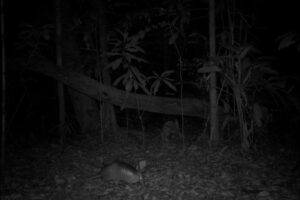
Armadillo. Armadillos are lunar phobic and less active when there is more lunar/moon illumination. Taken by a wildlife camera.

Moon Phases Influence Tropical Forest Mammals’ Behavior, Study Finds

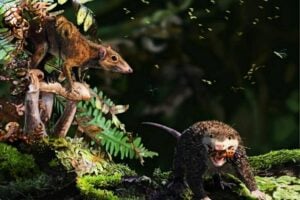
On the left is a parent of the early mammal Dryolestes which raises a brood after reaching sexual maturity at age four. On the right is a Haldanodon, a member of the family of mammal-like docodonts, before fully reaching the mammalian evolutionary level; the creature's lifespan was eleven to fourteen years.

Early mammals lived longer

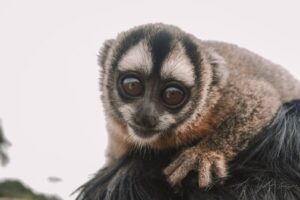
The best dads in the primate world? Owl monkey fathers take on the role of primary caregiver and only hand their babies back to their female partners for nursing.

Math Says Male Mammals Don’t Breastfeed to Protect Offspring from Harmful Microbes

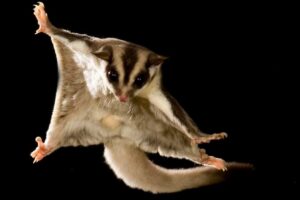
a sugar glider soaring through the air, with its patagium fully extended

Unlocking the Secrets of Flying Mammals: How Evolution Shaped the Patagium

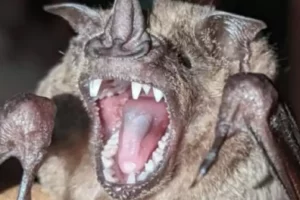
Bat teeth

Fruit, nectar, bugs and blood: How bat teeth and jaws evolved for a diverse dinnertime

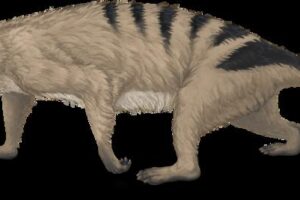
Life reconstruction of the ancient mammal relative Thrinaxodon from the Triassic Period of Earth history. Similar in size and shape to a modern mink, Thrinaxodon is close to the inferred size of the ancestor of the group of ancient mammal relatives called cynodonts, and it shared that ancestor’s likely preference for animal food. Image by April Neander.

Survival of the newest: the mammals that survive mass extinctions aren’t as “boring” as scientists thought


Specks of orange on a black background

Microplastics cause behavioral changes

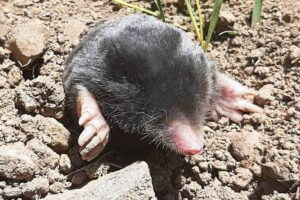
Talpa hakkariensis – found in the Hakkari region of southeastern Turkey – was identified as a new species of mole, highly distinctive in terms of both its morphology and DNA

Hidden moles in hidden holes: New species found after 3 million years

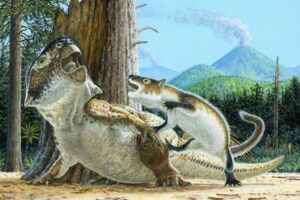
Illustration showing Repenomamus robustus as it attacks Psittacosaurus lujiatunensis moments before a volcanic debris flow buries them both, ca. 125 million years ago.

Unusual fossil shows rare evidence of a mammal attacking a dinosaur

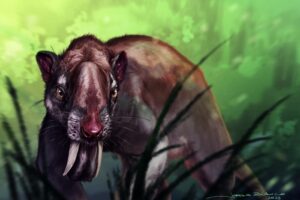
A reconstruction of Thylacosmilus atrox

How the “marsupial sabertooth” thylacosmilus saw its world

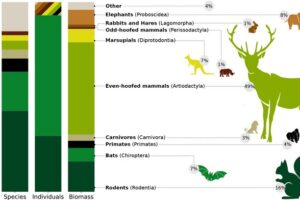
Sometimes more is less: Certain wild land mammals contribute relatively little to the global biomass despite having numerous individuals and species

The weight of responsibility: biomass of livestock dwarfs that of wild mammals

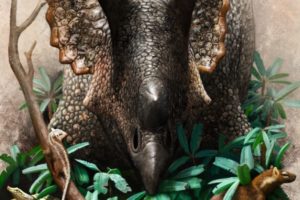
Dinosaur illiustration

Before asteroid, dinosaurs we’re killing it

Substack subscription form sign up

Comments

  • Karoly Mirnics on Common Prescription Drugs May Disrupt Cholesterol Pathways in the Womb and Raise Autism Risk
  • Aizen on Laziness helped lead to extinction of Homo erectus
  • Norwood johnson on Electrons in New Crystals Behave as If They Live in Four Dimensions
  • ScienceBlog.com on Hidden Geometry Could Finally Fix Quantum Computers
  • Theo Prinse on America Is Going Back to the Moon. This Time, It Plans to Stay
© 2026 ScienceBlog.com | Follow our RSS / XML feed