Skip to content
ScienceBlog.com
  • Featured Blogs
    • EU Horizon Blog
    • ESA Tracker
    • Experimental Frontiers
    • Josh Mitteldorf’s Aging Matters
    • Dr. Lu Zhang’s Gondwanaland
    • NeuroEdge
    • NIAAA
    • SciChi
    • The Poetry of Science
    • Wild Science
  • Topics
    • Brain & Behavior
    • Earth, Energy & Environment
    • Health
    • Life & Non-humans
    • Physics & Mathematics
    • Social Sciences
    • Space
    • Technology
  • Our Substack
  • Follow Us!
    • Bluesky
    • Threads
    • FaceBook
    • Google News
    • Twitter/X
  • Contribute/Contact

marine ecosystems

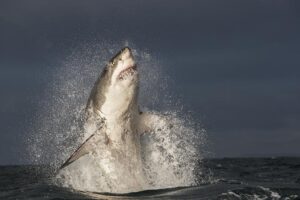
Great white shark breaches the surface in pursuit of its prey in False Bay, South Africa.

Great White Shark Disappearance Triggers Ecological Domino Effect

Ohio State logo

New technology lights way for accelerating coral reef restoration

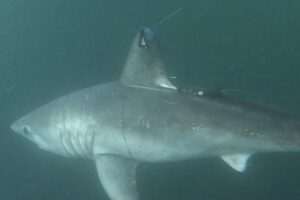
The pregnant porbeagle shark, subject of the study, after her release after tagging

Shark-Eat-Shark World: Tracking Tag Reveals Unexpected Predation of Large Porbeagle

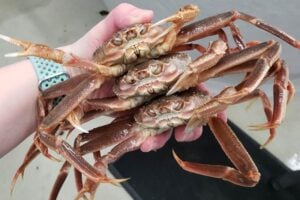
Three snow crabs. Credit: NOAA Fisheries

Climate Change Behind Sudden Collapse of Alaskan Snow Crab Population

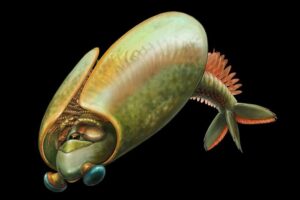
Researchers believe Odaraia could have swum upside down to gather food among its many spines along its legs.

Ancient “Taco-Shaped” Sea Creature Reveals Secrets of Early Arthropod Evolution

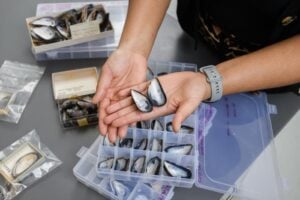
A selection of historic and modern mussel shells from the American Museum of Natural History's collection used in the study

East Coast Mussel shells Getting Holey

A photo of an anisakid worm — circled in red — in a canned salmon fillet.

Four Decades of Canned Salmon Reveal Secrets of Alaska’s Ecosystem

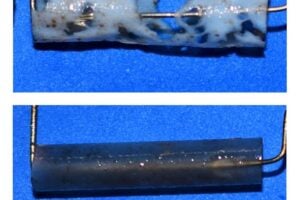
After 16 weeks in seawater, bioplastic straws made of foam (top image) broke down at least twice as fast as the solid versions (bottom image).

Lifetime of ‘biodegradable’ straws in the ocean is 8-20 months, study finds

sea otters and kelp

Sea otters helped prevent widespread California kelp forest declines

Believed to be predators in perpetual motion, grey reef sharks had previously only been observed in motion, leading most to believe they needed to swim in order to breath.

Some sharks don’t need to swim continuously to stay alive

Mighty oceans and humble ponds play key roles in biodiversity

Fishing for answers: new technology onboard can help protect oceans

Substack subscription form sign up

Comments

  • Karoly Mirnics on Common Prescription Drugs May Disrupt Cholesterol Pathways in the Womb and Raise Autism Risk
  • Aizen on Laziness helped lead to extinction of Homo erectus
  • Norwood johnson on Electrons in New Crystals Behave as If They Live in Four Dimensions
  • ScienceBlog.com on Hidden Geometry Could Finally Fix Quantum Computers
  • Theo Prinse on America Is Going Back to the Moon. This Time, It Plans to Stay
© 2026 ScienceBlog.com | Follow our RSS / XML feed