Skip to content
ScienceBlog.com
  • Featured Blogs
    • EU Horizon Blog
    • ESA Tracker
    • Experimental Frontiers
    • Josh Mitteldorf’s Aging Matters
    • Dr. Lu Zhang’s Gondwanaland
    • NeuroEdge
    • NIAAA
    • SciChi
    • The Poetry of Science
    • Wild Science
  • Topics
    • Brain & Behavior
    • Earth, Energy & Environment
    • Health
    • Life & Non-humans
    • Physics & Mathematics
    • Social Sciences
    • Space
    • Technology
  • Our Substack
  • Follow Us!
    • Bluesky
    • Threads
    • FaceBook
    • Google News
    • Twitter/X
  • Contribute/Contact

marine pollution

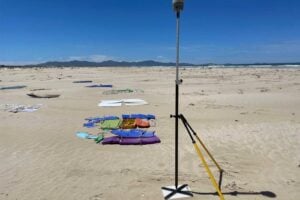
Plastic targets set up to test the new technology

Plastic rubbish on beaches can now be seen from space

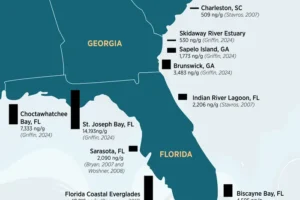
Scientists have found elevated mercury levels in dolphins throughout the Southeast since 2007. Sources: Bryan, Damseaux, Griffin, Stavros, Woshner.

Research finds dolphins with elevated mercury levels in Florida and Georgia

Cook's Petrel, from New Zealand, is an endangered species and is one of the seabirds most at risk from plastic exposure. During its migrations it crosses the Pacific Ocean, and its wintering areas are severely affected by the “big garbage island” of the North Pacific.

Sea of plastic: Mediterranean is the area of the world most at risk for endangered seabirds

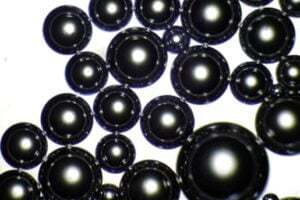
Microscopic photo of PA12, a marine microplastic pollutant.

Using optics to trace the flow of microplastics in oceans

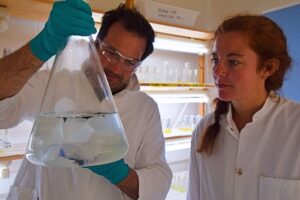
Maaike Goudriaan and research leader Helge Niemann in the lab. Photo: Maaike Goudriaan, NIOZ.

Bacteria that really do eat plastic

Seaweed

Seaweed farms could help clean marine pollution

Substack subscription form sign up

Comments

  • Marco Messina on More Than a Third of Americans Have Lost Relationships Over Politics
  • Anon on Why Fructose Behaves Less Like a Calorie and More Like a Hormone
  • Mark Mellinger on Living Plastic Can Self-Destruct on Command
  • Marie Feret on The Silent Frequency That Makes Old Buildings Feel Haunted
  • Dax on The Silent Frequency That Makes Old Buildings Feel Haunted
© 2026 ScienceBlog.com | Follow our RSS / XML feed