Skip to content
ScienceBlog.com
  • Featured Blogs
    • EU Horizon Blog
    • ESA Tracker
    • Experimental Frontiers
    • Josh Mitteldorf’s Aging Matters
    • Dr. Lu Zhang’s Gondwanaland
    • NeuroEdge
    • NIAAA
    • SciChi
    • The Poetry of Science
    • Wild Science
  • Topics
    • Brain & Behavior
    • Earth, Energy & Environment
    • Health
    • Life & Non-humans
    • Physics & Mathematics
    • Social Sciences
    • Space
    • Technology
  • Our Substack
  • Follow Us!
    • Bluesky
    • Threads
    • FaceBook
    • Google News
    • Twitter/X
  • Contribute/Contact

medical imaging

The above graphics illustrate what 3D imaging with XACT looks like with examples of the UC logo on the left and a bone sample on the right.

New X-ray Tech Captures 3D CT Images in a Single Shot, Cutting Radiation Exposure

Example scan

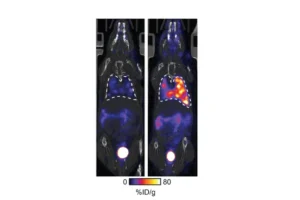
New Scan Spots Drug-Resistant Cancer Before Treatment Starts

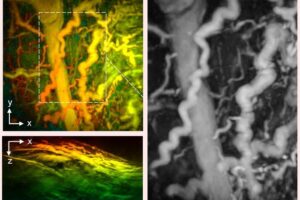
Disease captured by UCL hand-held 3D photoacoustic scanner.

Medical imaging breakthrough could transform cancer and arthritis diagnosis

Video: Wirestock/Creatas Video+/Getty Images Plus

New AI Tool Rivals Human Experts in Cancer Diagnosis and Prognosis

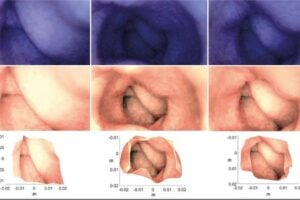
Three original images from an artificial colon, taken using an endoscope. The 3D model can be used to adjust the lighting in an original image so that darker areas become better illuminated, as shown in the images below. Bottom: The reconstructed 3D model based on the three originals.

New 3D Colon Models Could Replace Painful Colonoscopies

3D rendered image of a human head with a glowing, diamond-like structure in the brain area, symbolizing the potential use of diamond dust as an MRI contrast agent.

Accidental Discovery Reveals Diamond Dust’s Potential as MRI Contrast Agent

Illustration of a human heart

Novel CT exam reduces need for invasive artery treatment

Blue eye

AI Revolutionizes Eye Imaging, Offering Hope for Better Diagnosis of Retinal Diseases

Illustration of brain scan

New MRI Method Offers Hope for Early MS Detection and Treatment

child swimming in a public pool

Locked-in syndrome is predominant outcome when children survive drowning, larger study confirms

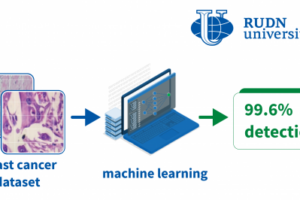
Diagram of new system

‘Attentive’ neural network recognizes breast cancer with 99.6% accuracy

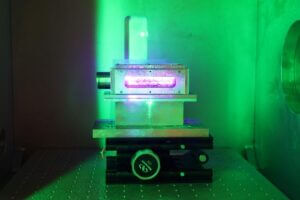
This gas cell is a key component of a compact wakefield laser accelerator developed at The University of Texas at Austin. Inside, an extremely powerful laser strikes helium gas, heats it into a plasma and creates waves that kick electrons from the gas out in a high-energy electron beam.

Compact accelerator technology achieves major energy milestone

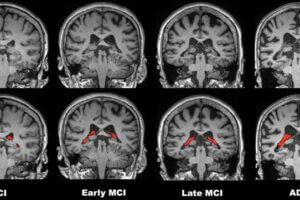
Brain MRI images.

Black patients face delays in Alzheimer’s diagnosis

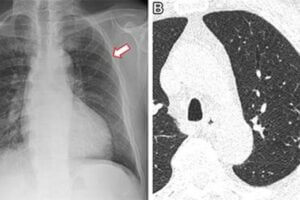
Frontal chest X-ray shows a small nodular opacity (arrow) in the left upper lung zone. Axial, non-contrast, low-dose chest CT scan shows a 9-mm solid nodule (arrow) in the left upper lobe.

AI identifies non-smokers at high risk for lung cancer

Older posts
Page1 Page2 Next →
Substack subscription form sign up

Comments

  • Karoly Mirnics on Common Prescription Drugs May Disrupt Cholesterol Pathways in the Womb and Raise Autism Risk
  • Aizen on Laziness helped lead to extinction of Homo erectus
  • Norwood johnson on Electrons in New Crystals Behave as If They Live in Four Dimensions
  • ScienceBlog.com on Hidden Geometry Could Finally Fix Quantum Computers
  • Theo Prinse on America Is Going Back to the Moon. This Time, It Plans to Stay
© 2026 ScienceBlog.com | Follow our RSS / XML feed