Skip to content
ScienceBlog.com
  • Featured Blogs
    • EU Horizon Blog
    • ESA Tracker
    • Experimental Frontiers
    • Josh Mitteldorf’s Aging Matters
    • Dr. Lu Zhang’s Gondwanaland
    • NeuroEdge
    • NIAAA
    • SciChi
    • The Poetry of Science
    • Wild Science
  • Topics
    • Brain & Behavior
    • Earth, Energy & Environment
    • Health
    • Life & Non-humans
    • Physics & Mathematics
    • Social Sciences
    • Space
    • Technology
  • Our Substack
  • Follow Us!
    • Bluesky
    • Threads
    • FaceBook
    • Google News
    • Twitter/X
  • Contribute/Contact

Metagenomics

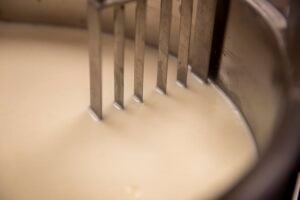
Samples included many collected from cheese making facilities Credit Teagasc

Massive Study Reveals Hidden World of Microbes in Our Food

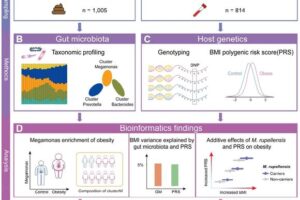
Figure S1. Study design, data analysis and experimental strategy for linking the human gut microbiota, genetics, and obesity. Related to STAR Methods. (A) Basic information of a Chinese obese cohort (n = 1,005). (B) Shotgun metagenomic sequencing and taxonomic profiling analysis on 1,005 collected fecal samples. (C) Whole genome sequencing conducted on 814 collected blood samples, and the calculation of polygenic risk score (PRS) for BMI based on BMI-associated common variants. (D) Identification of obesity-enriched microbial taxa, and assessment of the impacts of gut microbiota and host genetics on obesity. (E) Experimental design of functional examination of M. rupellensis and E. coli with heterologous expression of a myo-inositol-degrading enzyme in vitro and in vivo.

Megamonas bacterium found to influence obesity risk

Substack subscription form sign up

Comments

  • Brunette Keller on How New Herpes Drugs Jam a Virus’s Replication Engine
  • Aizen on Laziness helped lead to extinction of Homo erectus
  • Norwood johnson on Electrons in New Crystals Behave as If They Live in Four Dimensions
  • ScienceBlog.com on Hidden Geometry Could Finally Fix Quantum Computers
  • Theo Prinse on America Is Going Back to the Moon. This Time, It Plans to Stay
© 2026 ScienceBlog.com | Follow our RSS / XML feed