Skip to content
ScienceBlog.com
  • Featured Blogs
    • EU Horizon Blog
    • ESA Tracker
    • Experimental Frontiers
    • Josh Mitteldorf’s Aging Matters
    • Dr. Lu Zhang’s Gondwanaland
    • NeuroEdge
    • NIAAA
    • SciChi
    • The Poetry of Science
    • Wild Science
  • Topics
    • Brain & Behavior
    • Earth, Energy & Environment
    • Health
    • Life & Non-humans
    • Physics & Mathematics
    • Social Sciences
    • Space
    • Technology
  • Our Substack
  • Follow Us!
    • Bluesky
    • Threads
    • FaceBook
    • Google News
    • Twitter/X
  • Contribute/Contact

Microorganisms

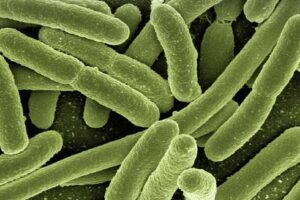
This image shows a microscopic view of E. coli bacteria, a species with an intimate relationship with humans.

New Technology Unscrambles the Chatter of Microbes

petri dish with gunk

Team Develops Polymers That Can Kill Bacteria

Tractor tilling a field with spoil overturned

Can soil microbes survive in a changing climate?

Facing external threats, bees may get help from internal organisms

Researchers from Brazil showed that Amazonian dark earth (ADE), soils enriched by Amerindian people thousands of years ago, increases the establishment and growth of seedlings of tree species important for reforestation. By copying the composition of ADE, especially its microbes, reforestation in Brazil and elsewhere could be sped up

Secret Weapon for Reforestation Found in Amazonian Soil

Stone-eating microbes could help humans colonize the moon and Mars

Substack subscription form sign up

Comments

  • Curtis Webber on The GPS-Killer? This Quantum Device ‘Feels’ Motion Like a Brain—Down to the Atomic Level
  • Ran on How the Age You First Had Sex Could Shape How You Age Decades Later
  • Sparty on How the Age You First Had Sex Could Shape How You Age Decades Later
  • Josh Mitteldorf on A Single TV Segment Sent Leucovorin Prescriptions for Autistic Children Soaring 2,000 Percent
  • Josh Mitteldorf on A Single TV Segment Sent Leucovorin Prescriptions for Autistic Children Soaring 2,000 Percent
© 2026 ScienceBlog.com | Follow our RSS / XML feed