Skip to content
ScienceBlog.com
  • Featured Blogs
    • EU Horizon Blog
    • ESA Tracker
    • Experimental Frontiers
    • Josh Mitteldorf’s Aging Matters
    • Dr. Lu Zhang’s Gondwanaland
    • NeuroEdge
    • NIAAA
    • SciChi
    • The Poetry of Science
    • Wild Science
  • Topics
    • Brain & Behavior
    • Earth, Energy & Environment
    • Health
    • Life & Non-humans
    • Physics & Mathematics
    • Social Sciences
    • Space
    • Technology
  • Our Substack
  • Follow Us!
    • Bluesky
    • Threads
    • FaceBook
    • Google News
    • Twitter/X
  • Contribute/Contact

migration

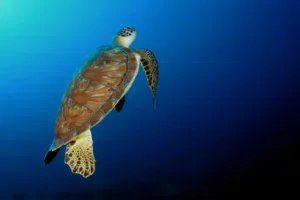
A green turtle comes up for air. Like many air-breathing marine megafauna, green turtles optimise their swim depth during migration to minimise the cost of transport, travelling at around three body-depths beneath the surface in order to avoid creating waves whilst maximising horizontal distance travelled (Picture © R. D. and B. S. Kirkby).

Marine Animals Find Energy-Saving Sweet Spot for Ocean Travel

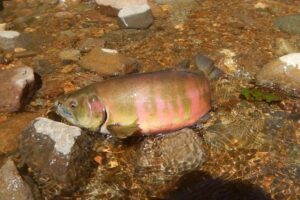
Researchers built a mathematical model looking at how the migratory choices of female masu salmon change in different environmental conditions.

Math Model Reveals How Environmental Changes Shape Salmon Migration Patterns

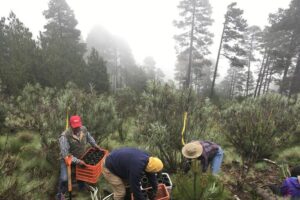
Planting Abies religiosa (Sacred fir) seedlings under the shade of pre-existing shrubs (Senecio cinerarioides, narrow green-greyish foliage) as protective “nurse plants”. Large trees on background are adult Pinus hartwegii, the pine that reaches the timberline. Abies religiosa is completely absent in this site at 3800 m of elevation, northeaster slope of Nevado de Toluca volcano, central Mexico, because it is too high in elevation. Planters personnel are locals of Native Indian origin.

Scientists create new overwintering sites for monarch butterflies on a warming planet

Corner of a barbed wire fence

Surge Facilities Speed Up Family Reunification for Migrant Children, Study Finds

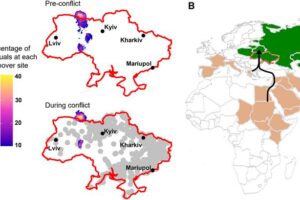
Distribution, migration, and stopover use in Ukraine for Greater Spotted Eagles

Migrating Eagles Forced to Dodge Conflict in Ukraine, Study Finds

Neanderthal

The encounter between Neanderthals and Sapiens as told by their genomes

Stars and inner compass guide moths and birds, say researchers

Europe’s ancient languages shed light on a great migration and weather talk

Contemporary replica of a Polynesian double-hulled voyaging canoe.

How larger body sizes helped the colonizers of New Zealand

Monarch butterfly. Pixabay

Monarch Butterflies’ White Spots Aid Long-Distance Migration Success

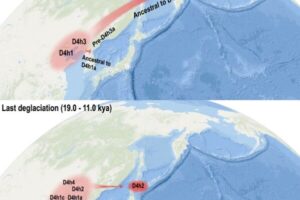
Infochart showing migration from China to Japan, and then to the Americas

Were early Americans really Chinese — or Japanese?

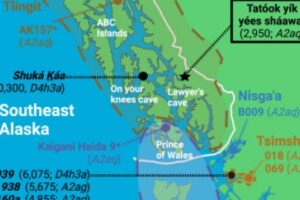
The bone that researchers found belonged to an ancient individual that the Wrangell Cooperative Association named Tatóok yík yées sháawat (Young lady in cave). Credit: University at Buffalo

Searching for ancient bears in an Alaskan cave led to an important human discovery

Substack subscription form sign up

Comments

  • Karoly Mirnics on Common Prescription Drugs May Disrupt Cholesterol Pathways in the Womb and Raise Autism Risk
  • Aizen on Laziness helped lead to extinction of Homo erectus
  • Norwood johnson on Electrons in New Crystals Behave as If They Live in Four Dimensions
  • ScienceBlog.com on Hidden Geometry Could Finally Fix Quantum Computers
  • Theo Prinse on America Is Going Back to the Moon. This Time, It Plans to Stay
© 2026 ScienceBlog.com | Follow our RSS / XML feed