Skip to content
ScienceBlog.com
  • Featured Blogs
    • EU Horizon Blog
    • ESA Tracker
    • Experimental Frontiers
    • Josh Mitteldorf’s Aging Matters
    • Dr. Lu Zhang’s Gondwanaland
    • NeuroEdge
    • NIAAA
    • SciChi
    • The Poetry of Science
    • Wild Science
  • Topics
    • Brain & Behavior
    • Earth, Energy & Environment
    • Health
    • Life & Non-humans
    • Physics & Mathematics
    • Social Sciences
    • Space
    • Technology
  • Our Substack
  • Follow Us!
    • Bluesky
    • Threads
    • FaceBook
    • Google News
    • Twitter/X
  • Contribute/Contact

Monitoring

1 in 5 butterflies have disappeared in the United States since the year 2000, according to research featuring faculty at Binghamton University, State University of New York.

20% of Butterflies in the U.S. Have Disappeared Since 2000

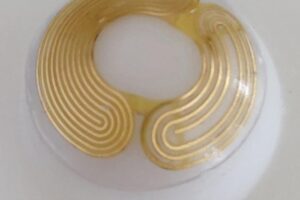
This “smart” contact lens could someday help measure eye pressure and send wireless signals to enable early detection of glaucoma.

Researchers Develop “Smart” Contact Lens to Detect Glaucoma Across Wide Temperature Range

MIT researchers analyzed the EEG patterns of patients under general anesthesia and found brain wave signatures that could help doctors determine when patients are transitioning into a deep state of unconsciousness known as burst suppression, which is associated with cognitive impairments after patients wake up. Credits:Image: Jose-Luis Olivares/MIT with figures from iStock

Study finds tracking brain waves could reduce post-op complications

Substack subscription form sign up

Comments

  • Karoly Mirnics on Common Prescription Drugs May Disrupt Cholesterol Pathways in the Womb and Raise Autism Risk
  • Aizen on Laziness helped lead to extinction of Homo erectus
  • Norwood johnson on Electrons in New Crystals Behave as If They Live in Four Dimensions
  • ScienceBlog.com on Hidden Geometry Could Finally Fix Quantum Computers
  • Theo Prinse on America Is Going Back to the Moon. This Time, It Plans to Stay
© 2026 ScienceBlog.com | Follow our RSS / XML feed