Skip to content
ScienceBlog.com
  • Featured Blogs
    • EU Horizon Blog
    • ESA Tracker
    • Experimental Frontiers
    • Josh Mitteldorf’s Aging Matters
    • Dr. Lu Zhang’s Gondwanaland
    • NeuroEdge
    • NIAAA
    • SciChi
    • The Poetry of Science
    • Wild Science
  • Topics
    • Brain & Behavior
    • Earth, Energy & Environment
    • Health
    • Life & Non-humans
    • Physics & Mathematics
    • Social Sciences
    • Space
    • Technology
  • Our Substack
  • Follow Us!
    • Bluesky
    • Threads
    • FaceBook
    • Google News
    • Twitter/X
  • Contribute/Contact

nanoparticles

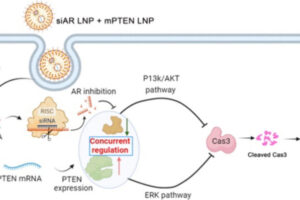
infographic of process involved in the liposomal treatment

Cancer Treatment Uses RNA to Restore Natural Tumor Fighting Balance

Ohio State logo

Light-induced gene therapy disables cancer cells’ energy center

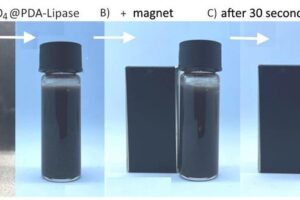
Summary of purification process: water polluted by microplastics (PET); addition of magnetic nanoparticles functionalized with polydopamine and lipase; removal of nanoparticles with microplastics using a magnet

Magnetic Nanoparticles: A Novel Solution for Removing Dangerous Microplastics from Water

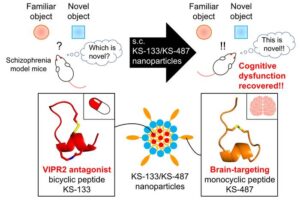
Nanoparticle-based drug delivery systems (DDS) containing peptides offer an innovative approach to effectively treat schizophrenia. Such DDSs hold significant potential to revolutionize therapeutic strategies against diseases that affect the central nervous system.

Nanoparticle Breakthrough Could Aid Schizophrenia Treatment

Jiantao Guo (left), professor of chemistry, and Janos Zempleni, Willa Cather Professor of molecular nutrition, were selected as Phase 1 winners in the National Institutes of Health's Targeted Genome Editor Delivery Challenge.

Milk-based nanoparticles sidestep problem that plagues other gene editing tools

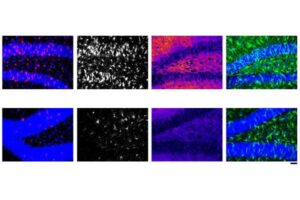
In the brain's immune cells, called microglia, the gene product PU.1 is associated with excessive inflammation in neurological disorders such as Alzheimer's disease. MIT researchers delivered a small interfering RNA (siRNA) via lipid nanoparticles to reduce expression of PU.1 in mice. Microglia stained for PU.1 or related markers are less evident in the bottom row, which reflects the effects of the siRNA, compared to an experimental control (top row).

Nanoparticles Target Brain Cells to Quell Alzheimer’s Inflammation

Stanford engineers have developed an injectable hydrogel depot technology that enables GLP-1 drugs to be administered once every four months, compared to repeated daily injections.

New drug delivery system could reduce daily diabetes shots to just three a year

Woman with nasal spray. Pixabay

Pre-installing naloxone in addicts before the overdose

Treatment-resistant prostate cancer

Researchers target prostate cancer with oral chemotherapy

Ohio State logo

A lung injury therapy derived from adult skin cells

Sponge coated with nanoparticles (left) next to an uncoated cellulose sponge

Metal-filtering sponge removes lead from water

Embryonic stem cell

Scientists Break Through Stem Cell Barrier with New Delivery Method

University of Minnesota Twin Cities researchers have developed a groundbreaking new diagnostic technique that will allow for faster and more accurate detection of neurodegenerative diseases that affect humans, such as Alzheimer's and Parkinson's, and similar diseases that affect animals, such as chronic wasting disease (CWD) and mad cow disease.

Faster, More Accurate Tests for Neurodegenerative Diseases in Nano-QuIC

The UCLA-developed nanoparticle has sugars on its surface that target specific cells in the liver (dark blue and pink shapes) and an mRNA payload that encodes for a specific protein fragment (red).

Nanoparticle with mRNA appears to prevent, treat peanut allergies in mice

Older posts
Page1 Page2 Next →
Substack subscription form sign up

Comments

  • Mark Mellinger on Living Plastic Can Self-Destruct on Command
  • Marie Feret on The Silent Frequency That Makes Old Buildings Feel Haunted
  • Dax on The Silent Frequency That Makes Old Buildings Feel Haunted
  • Karoly Mirnics on Common Prescription Drugs May Disrupt Cholesterol Pathways in the Womb and Raise Autism Risk
  • Aizen on Laziness helped lead to extinction of Homo erectus
© 2026 ScienceBlog.com | Follow our RSS / XML feed