Skip to content
ScienceBlog.com
  • Featured Blogs
    • EU Horizon Blog
    • ESA Tracker
    • Experimental Frontiers
    • Josh Mitteldorf’s Aging Matters
    • Dr. Lu Zhang’s Gondwanaland
    • NeuroEdge
    • NIAAA
    • SciChi
    • The Poetry of Science
    • Wild Science
  • Topics
    • Brain & Behavior
    • Earth, Energy & Environment
    • Health
    • Life & Non-humans
    • Physics & Mathematics
    • Social Sciences
    • Space
    • Technology
  • Our Substack
  • Follow Us!
    • Bluesky
    • Threads
    • FaceBook
    • Google News
    • Twitter/X
  • Contribute/Contact

neural networks

The SuperMUC-NG at the Leibniz Supercomputing Centre is the eighth fastest computer in the world.

New method significantly reduces AI energy consumption

iguana

Overthinking what you said? It’s your ‘lizard brain’ talking to newer, advanced parts of your brain

Weill Cornell Medicine investigators used AI to discern subtypes of Parkinson's disease from diverse data sources. Credit: Shutterstock

New Algorithm Lets Neural Networks Learn Continuously Without Forgetting

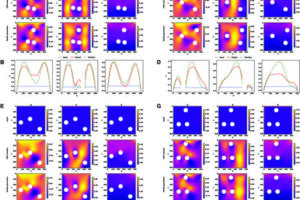
Contour plots (A, C, E, G) compare the input conditions, traditional finite difference method solutions, and the solutions generated by model B3, the most advanced model in the study. Velocity profiles (B, D, F, H) display detailed velocity information at specific cross-sections of the simulation domain.

Deep Learning Accelerates Fluid Dynamics Simulations, Solving Complex Equations 1,000 Times Faster

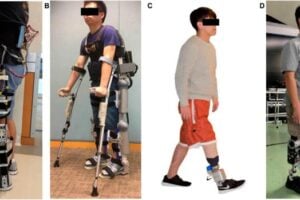
(A) Assistive knee brace, (B) CUHK-EXO, (C) ankle-foot prosthesis, and (D) transfemoral prosthesis

New Technique Improves Control of Lower Limb Assistive Devices

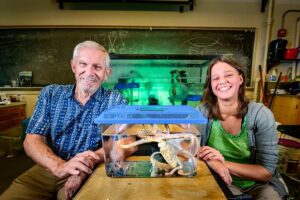
Rhanor Gillette, left, and Ekaterina Gribkova developed an AI that can navigate new environments, seek novelty and rewards, and learn in real time. Their research into the neural pathways that drive behavior in sea slugs and octopuses guided the work.

New AI ‘CyberOctopus’ Learns Like Animals, Navigates and Explores on Its Own

brain illustration

Re-frame of mind: Do our brains have a built-in sense of ‘grammar’?

MIT neuroscientists have found that computational models of hearing and vision can build up their own idiosyncratic “invariances” — meaning that they respond the same way to stimuli with very different features.

Study: Deep neural networks don’t see the world the way we do

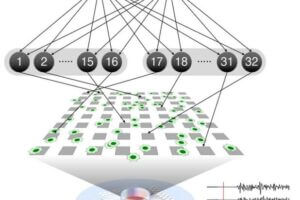
The experimental setup. Cultured neurons grew on top of electrodes. Patterns of electrical stimulation trained the neurons to reorganize so that they could distinguish two hidden sources. Waveforms at the bottom represent the spiking responses to a sensory stimulus (red line).

Math theory predicts self-organized learning in real neurons

Digital brain illustration. Pixabay

Quantum Computers Embrace Quantum Mechanics

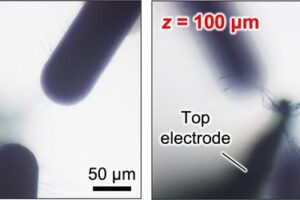
Optical microscopy images of the 3D polymer wiring between a top electrode (TE) and three bottom electrodes (BEs) at the vertical distance from the surface of glass substrate z = 0 and 100 μm.

Neuromorphic Wetware: A Rainforest of Neural Networks in a Polymer Brain

Brain disorders trigger search for new clues and cures

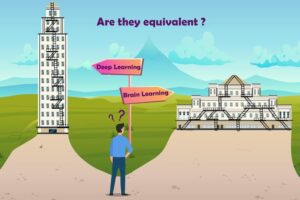
Figure: Scheme of Deep Machine Learning consisting of many layers (left) vs. Shallow Brain Learning consisting of a few layers with enlarged width (right). For more detail see https://www.nature.com/articles/s41598-023-32559-8

Is Deep Learning a necessary ingredient for Artificial Intelligence?

Caption:MIT researchers have found that neural networks can be designed so they minimize the probability of misclassifying a data input. Credits:Image: Jose-Luis Olivares, MIT, with figures from iStock

How to design neural networks optimally suited for certain tasks

Older posts
Page1 Page2 Next →
Substack subscription form sign up

Comments

  • Karoly Mirnics on Common Prescription Drugs May Disrupt Cholesterol Pathways in the Womb and Raise Autism Risk
  • Aizen on Laziness helped lead to extinction of Homo erectus
  • Norwood johnson on Electrons in New Crystals Behave as If They Live in Four Dimensions
  • ScienceBlog.com on Hidden Geometry Could Finally Fix Quantum Computers
  • Theo Prinse on America Is Going Back to the Moon. This Time, It Plans to Stay
© 2026 ScienceBlog.com | Follow our RSS / XML feed