Skip to content
ScienceBlog.com
  • Featured Blogs
    • EU Horizon Blog
    • ESA Tracker
    • Experimental Frontiers
    • Josh Mitteldorf’s Aging Matters
    • Dr. Lu Zhang’s Gondwanaland
    • NeuroEdge
    • NIAAA
    • SciChi
    • The Poetry of Science
    • Wild Science
  • Topics
    • Brain & Behavior
    • Earth, Energy & Environment
    • Health
    • Life & Non-humans
    • Physics & Mathematics
    • Social Sciences
    • Space
    • Technology
  • Our Substack
  • Follow Us!
    • Bluesky
    • Threads
    • FaceBook
    • Google News
    • Twitter/X
  • Contribute/Contact

neuroscience

Buddha statue

Buddhism precepts may be linked to lower depression risk

Excess fat triggers immune cells to overeat serotonin in the brain of developing male mice, leading to depression-like behavior

Mom’s dietary fat rewires male and female brains differently

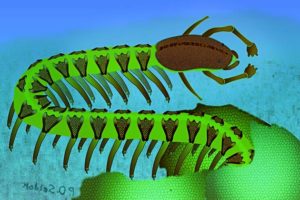
Artist's impression of an individual 525-million-year-old Cardiodictyon catenulum on the shallow coastal sea floor, emerging from the shelter of a small stromatolite built by photosynthetic bacteria.

525-million-year-old fossil defies textbook explanation for brain evolution

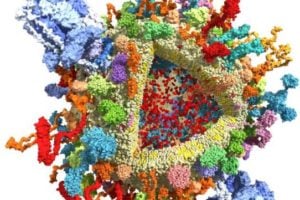
The cover illustration shows vacuolar-type adenosine triphosphatases (V-ATPases, large blue structures) on a synaptic vesicle from a nerve cell in the mammalian brain. Image: C. Kutzner, H. Grubmüller and R. Jahn/Max Planck Institute for Multidisciplinary Sciences.

Copenhagen researchers claim major breakthrough in understanding the brain

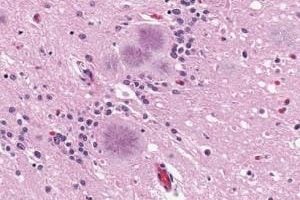
Down syndrome, like Alzheimer’s, is a double-prion disorder

Newer posts
← Previous Page1 … Page21 Page22
Substack subscription form sign up

Comments

  • Mark Mellinger on Living Plastic Can Self-Destruct on Command
  • Marie Feret on The Silent Frequency That Makes Old Buildings Feel Haunted
  • Dax on The Silent Frequency That Makes Old Buildings Feel Haunted
  • Karoly Mirnics on Common Prescription Drugs May Disrupt Cholesterol Pathways in the Womb and Raise Autism Risk
  • Aizen on Laziness helped lead to extinction of Homo erectus
© 2026 ScienceBlog.com | Follow our RSS / XML feed