Skip to content
ScienceBlog.com
  • Featured Blogs
    • EU Horizon Blog
    • ESA Tracker
    • Experimental Frontiers
    • Josh Mitteldorf’s Aging Matters
    • Dr. Lu Zhang’s Gondwanaland
    • NeuroEdge
    • NIAAA
    • SciChi
    • The Poetry of Science
    • Wild Science
  • Topics
    • Brain & Behavior
    • Earth, Energy & Environment
    • Health
    • Life & Non-humans
    • Physics & Mathematics
    • Social Sciences
    • Space
    • Technology
  • Our Substack
  • Follow Us!
    • Bluesky
    • Threads
    • FaceBook
    • Google News
    • Twitter/X
  • Contribute/Contact

Ocean circulation

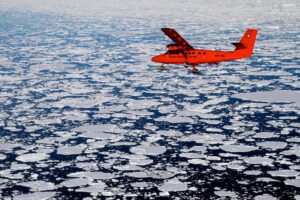
A BAS Twin Otter flies over Antarctic sea ice.

Arctic Sea Ice Loss Could Trigger Major Changes in Ocean Circulation

As the ocean gets weaker, it could release more carbon from the deep ocean into the atmosphere — rather than less, as some have predicted. Credits:Image: MIT News; iStock

Ocean Circulation Slowdown Could Accelerate Climate Change, MIT Study Finds

Foraminifera shells helped scientists piece together a picture of ocean movement during the Eocene period, where high atmospheric carbon levels caused the exchange of ocean waters to slow down.

Ancient ocean slowdown warns of future climate chaos

The Icefin underwater vehicle has sonar, chemical and biological sensors that help researchers characterize sub-ice environments.

Underwater robot finds new circulation pattern in Antarctic ice shelf

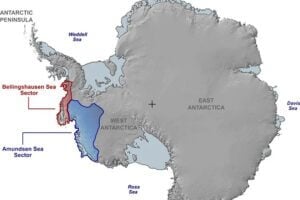
Map of Antarctica highlighting the Amundsen and Bellingshausen Seas

Runaway West Antarctic ice retreat can be slowed by climate-driven changes in ocean temperature

Ocean

Global warming may shutdown ocean deep circulation

Substack subscription form sign up

Comments

  • Brunette Keller on How New Herpes Drugs Jam a Virus’s Replication Engine
  • Aizen on Laziness helped lead to extinction of Homo erectus
  • Norwood johnson on Electrons in New Crystals Behave as If They Live in Four Dimensions
  • ScienceBlog.com on Hidden Geometry Could Finally Fix Quantum Computers
  • Theo Prinse on America Is Going Back to the Moon. This Time, It Plans to Stay
© 2026 ScienceBlog.com | Follow our RSS / XML feed