Skip to content
ScienceBlog.com
  • Featured Blogs
    • EU Horizon Blog
    • ESA Tracker
    • Experimental Frontiers
    • Josh Mitteldorf’s Aging Matters
    • Dr. Lu Zhang’s Gondwanaland
    • NeuroEdge
    • NIAAA
    • SciChi
    • The Poetry of Science
    • Wild Science
  • Topics
    • Brain & Behavior
    • Earth, Energy & Environment
    • Health
    • Life & Non-humans
    • Physics & Mathematics
    • Social Sciences
    • Space
    • Technology
  • Our Substack
  • Follow Us!
    • Bluesky
    • Threads
    • FaceBook
    • Google News
    • Twitter/X
  • Contribute/Contact

ocean conservation

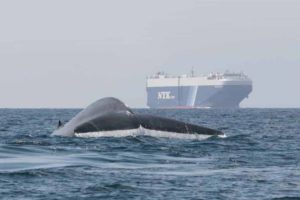
Whales and ship in background

Global Study Maps Whale-Ship Collision Risk: 92% of Whale Habitats Cross Shipping Lanes

floating plastic bag

Millions of Tons of Plastic Piling Up on Ocean Floors

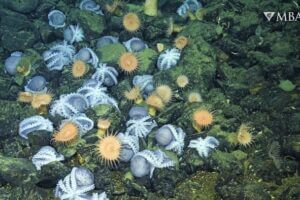
An aggregation of female pearl octopus (Muusoctopus robustus) nesting at the Octopus Garden, located near Davidson Seamount off the Central California at a depth of approximately 3,200 meters. Researchers used MBARI's advanced technology to confirm pearl octopus gather at the Octopus Garden to mate and nest. Warm water from hydrothermal springs accelerates development of octopus embryos, giving young octopus a better chance of survival.

Why thousands of octopus migrate to deep-sea thermal springs

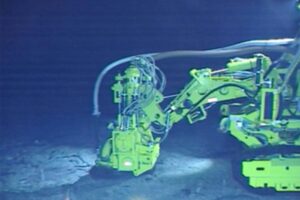
A green robot arm

Echoes from the Deep

Oceans to get better protection with connected underwater technology

Substack subscription form sign up

Comments

  • Karoly Mirnics on Common Prescription Drugs May Disrupt Cholesterol Pathways in the Womb and Raise Autism Risk
  • Aizen on Laziness helped lead to extinction of Homo erectus
  • Norwood johnson on Electrons in New Crystals Behave as If They Live in Four Dimensions
  • ScienceBlog.com on Hidden Geometry Could Finally Fix Quantum Computers
  • Theo Prinse on America Is Going Back to the Moon. This Time, It Plans to Stay
© 2026 ScienceBlog.com | Follow our RSS / XML feed