Skip to content
ScienceBlog.com
  • Featured Blogs
    • EU Horizon Blog
    • ESA Tracker
    • Experimental Frontiers
    • Josh Mitteldorf’s Aging Matters
    • Dr. Lu Zhang’s Gondwanaland
    • NeuroEdge
    • NIAAA
    • SciChi
    • The Poetry of Science
    • Wild Science
  • Topics
    • Brain & Behavior
    • Earth, Energy & Environment
    • Health
    • Life & Non-humans
    • Physics & Mathematics
    • Social Sciences
    • Space
    • Technology
  • Our Substack
  • Follow Us!
    • Bluesky
    • Threads
    • FaceBook
    • Google News
    • Twitter/X
  • Contribute/Contact

optical computing

light crystal illustration

Scientists Design First Practical Light-Amplifying Crystal That Could Revolutionize Medical Sensors

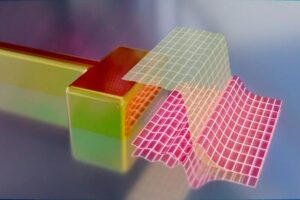
Artist's impression of an electrically contacted optical antenna (left) and the quantum mechanical distribution of its surface electrons. The normal distribution is shown in yellow, while the change induced by an applied voltage is shown in red.

Optical Antennas: A Leap Toward Faster Computer Chips

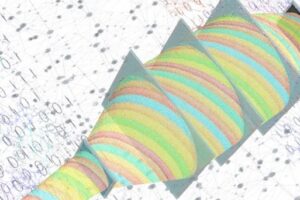
Massively parallel universal linear transformations using a wavelength-multiplexed diffractive deep neural network.

Optical Computing Takes a Giant Leap Forward: New Technique Allows for Massively Parallel, Energy-Efficient Processing

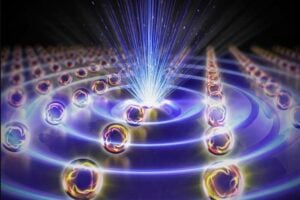
MIT researchers have developed a technique that greatly reduces the error in an optical neural network, which uses light to process data instead of electrical signals. With their technique, the larger an optical neural network becomes, the lower the error in its computations. This could enable them to scale these devices up so they would be large enough for commercial uses.

Breaking the scaling limits of analog computing

Substack subscription form sign up

Comments

  • Simon on A New Theory Says DMT Entities Might Be Real, and Proposes How to Test It
  • Sue Ann Hayes on Hidden Nuclear Protein Fuels Pancreatic Cancer’s Deadly Aggression
  • Curtis Webber on The GPS-Killer? This Quantum Device ‘Feels’ Motion Like a Brain—Down to the Atomic Level
  • Ran on How the Age You First Had Sex Could Shape How You Age Decades Later
  • Sparty on How the Age You First Had Sex Could Shape How You Age Decades Later
© 2026 ScienceBlog.com | Follow our RSS / XML feed