Skip to content
ScienceBlog.com
  • Featured Blogs
    • EU Horizon Blog
    • ESA Tracker
    • Experimental Frontiers
    • Josh Mitteldorf’s Aging Matters
    • Dr. Lu Zhang’s Gondwanaland
    • NeuroEdge
    • NIAAA
    • SciChi
    • The Poetry of Science
    • Wild Science
  • Topics
    • Brain & Behavior
    • Earth, Energy & Environment
    • Health
    • Life & Non-humans
    • Physics & Mathematics
    • Social Sciences
    • Space
    • Technology
  • Our Substack
  • Follow Us!
    • Bluesky
    • Threads
    • FaceBook
    • Google News
    • Twitter/X
  • Contribute/Contact

organ transplantation

Surgeons transplanting the pig heart

Second Pig Heart Transplant Patient Helps Scientists Map Future of Xenotransplantation

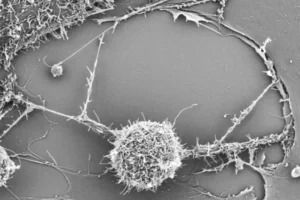
Nanotubes deliver mitochondria to T cells, supercharging the T cells to make them more effective in the fight against cancer. Image courtesy of Shiladitya Sengupta, BWH

Study finds ‘supercharging’ T cells with mitochondria enhances their antitumor activity

Dr. Anton Skaro, Associate Scientist at Lawson Health Research Institute and Surgical Director of Liver Transplantation at London Health Sciences Centre in London, Ont., is pictured with the pump that helps circulate blood to organs that are to be donated.

Revolutionary Organ Transplant Technique Debuts in Canada, Promising More Lives Saved

Older man with child. Unsplash

Older organs triggers accelerated aging in transplant recipients

Illustration of a heart and stethoscope

Transfer of ageing: New drug class prevents key ageing mechanism in organ transplants

Substack subscription form sign up

Comments

  • Simon on A New Theory Says DMT Entities Might Be Real, and Proposes How to Test It
  • Sue Ann Hayes on Hidden Nuclear Protein Fuels Pancreatic Cancer’s Deadly Aggression
  • Curtis Webber on The GPS-Killer? This Quantum Device ‘Feels’ Motion Like a Brain—Down to the Atomic Level
  • Ran on How the Age You First Had Sex Could Shape How You Age Decades Later
  • Sparty on How the Age You First Had Sex Could Shape How You Age Decades Later
© 2026 ScienceBlog.com | Follow our RSS / XML feed