Skip to content
ScienceBlog.com
  • Featured Blogs
    • EU Horizon Blog
    • ESA Tracker
    • Experimental Frontiers
    • Josh Mitteldorf’s Aging Matters
    • Dr. Lu Zhang’s Gondwanaland
    • NeuroEdge
    • NIAAA
    • SciChi
    • The Poetry of Science
    • Wild Science
  • Topics
    • Brain & Behavior
    • Earth, Energy & Environment
    • Health
    • Life & Non-humans
    • Physics & Mathematics
    • Social Sciences
    • Space
    • Technology
  • Our Substack
  • Follow Us!
    • Bluesky
    • Threads
    • FaceBook
    • Google News
    • Twitter/X
  • Contribute/Contact

Particulate matter

Monitoring particle air pollution either side of the tredge installed at St Ambrose primary school, Manchester

Roadside hedges can help protect kids’ lungs

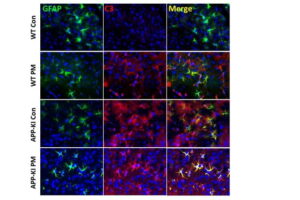
The study examined the brains of two types of mice: normal mice and mice with Alzheimer's disease. The mice were exposed to purified air or very small particles in the air. The researchers wanted to see if there were any changes in a type of brain cell called astrocytes. The astrocytes were stained green in the images, and the harmful and activated astrocytes appeared red. The merged images showed that the harmful astrocytes were more prevalent in the brains of the Alzheimer's mice exposed to the small particles. This suggests that exposure to these particles can activate harmful astrocytes in the brains of mice with Alzheimer's disease.

Traffic pollution weakens brain function

Pollution seen via a hazy sky showing a golden sun

Dirty Hearts

Substack subscription form sign up

Comments

  • Marco Messina on More Than a Third of Americans Have Lost Relationships Over Politics
  • Anon on Why Fructose Behaves Less Like a Calorie and More Like a Hormone
  • Mark Mellinger on Living Plastic Can Self-Destruct on Command
  • Marie Feret on The Silent Frequency That Makes Old Buildings Feel Haunted
  • Dax on The Silent Frequency That Makes Old Buildings Feel Haunted
© 2026 ScienceBlog.com | Follow our RSS / XML feed