Skip to content
ScienceBlog.com
  • Featured Blogs
    • EU Horizon Blog
    • ESA Tracker
    • Experimental Frontiers
    • Josh Mitteldorf’s Aging Matters
    • Dr. Lu Zhang’s Gondwanaland
    • NeuroEdge
    • NIAAA
    • SciChi
    • The Poetry of Science
    • Wild Science
  • Topics
    • Brain & Behavior
    • Earth, Energy & Environment
    • Health
    • Life & Non-humans
    • Physics & Mathematics
    • Social Sciences
    • Space
    • Technology
  • Our Substack
  • Follow Us!
    • Bluesky
    • Threads
    • FaceBook
    • Google News
    • Twitter/X
  • Contribute/Contact

photosynthesis

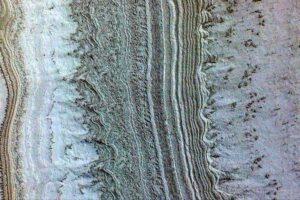
This image taken by NASA’s Mars Reconnaissance Orbiter shows ice sheets at Mars’ south pole.

Mars Ice Deposits May Harbor Potential for Microbial Life

Shining a light on tiny, solar-powered animals

Shining a light on tiny, solar-powered animals

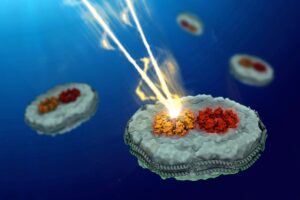
For the first time, MIT chemists have measured the energy transfer between photosynthetic light-harvesting proteins, allowing them to discover that the disorganized arrangement of light-harvesting proteins boosts the efficiency of the energy transduction. Credits:Image: Courtesy of the researchers

Chemists discover why photosynthetic light-harvesting is so efficient

A University of Chicago study found links at the atomic level between photosynthesis and exciton condensates—a strange state of physics that allows energy to flow frictionlessly through a material. The finding is scientifically intriguing and may suggest new ways to think about designing electronics, the authors said.

Scientists find link between photosynthesis and ‘fifth state of matter’

Substack subscription form sign up

Comments

  • Karoly Mirnics on Common Prescription Drugs May Disrupt Cholesterol Pathways in the Womb and Raise Autism Risk
  • Aizen on Laziness helped lead to extinction of Homo erectus
  • Norwood johnson on Electrons in New Crystals Behave as If They Live in Four Dimensions
  • ScienceBlog.com on Hidden Geometry Could Finally Fix Quantum Computers
  • Theo Prinse on America Is Going Back to the Moon. This Time, It Plans to Stay
© 2026 ScienceBlog.com | Follow our RSS / XML feed