Skip to content
ScienceBlog.com
  • Featured Blogs
    • EU Horizon Blog
    • ESA Tracker
    • Experimental Frontiers
    • Josh Mitteldorf’s Aging Matters
    • Dr. Lu Zhang’s Gondwanaland
    • NeuroEdge
    • NIAAA
    • SciChi
    • The Poetry of Science
    • Wild Science
  • Topics
    • Brain & Behavior
    • Earth, Energy & Environment
    • Health
    • Life & Non-humans
    • Physics & Mathematics
    • Social Sciences
    • Space
    • Technology
  • Our Substack
  • Follow Us!
    • Bluesky
    • Threads
    • FaceBook
    • Google News
    • Twitter/X
  • Contribute/Contact

plastic pollution

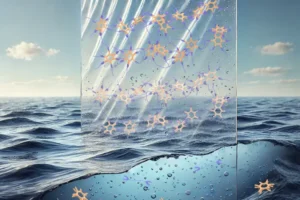
Artistic rendering of the new plastic. Cross linked salt bridges visible in the plastic outside the seawater give it its structure and strength. In seawater (and in soil, not depicted), resalting destroys the bridges, prevending microplastic formation and allowing the plastic to become biodegradable.

Scientists Create Plastic That Safely Dissolves in Seawater, Preventing Microplastic Pollution

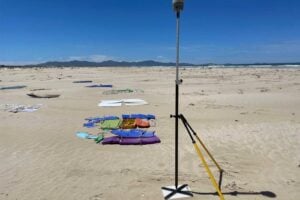
Plastic targets set up to test the new technology

Plastic rubbish on beaches can now be seen from space

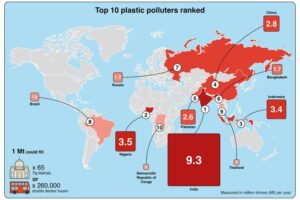
Infographic: Top 10 Plastic Polluters Ranked. Credit Dr Angeliki Savvantoglou of Bear Bones

Global Plastic Pollution Crisis: Uncollected Waste, Open Burning Major Culprits

floating plastic bag

Millions of Tons of Plastic Piling Up on Ocean Floors

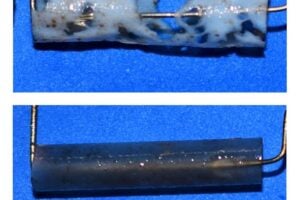
After 16 weeks in seawater, bioplastic straws made of foam (top image) broke down at least twice as fast as the solid versions (bottom image).

Lifetime of ‘biodegradable’ straws in the ocean is 8-20 months, study finds

Plastic fork. Pixabay

Nudging food delivery customers to skip the fork drastically cuts plastic waste

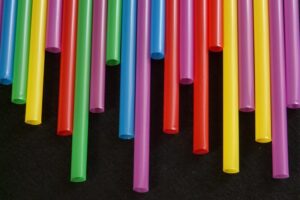
Colorful drinking straws made from plastic. Pixabay

Paper drinking straws, cups bring their own health, environment problems

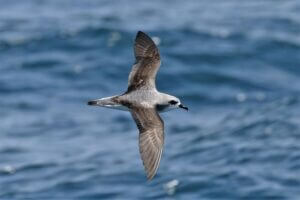
Cook's Petrel, from New Zealand, is an endangered species and is one of the seabirds most at risk from plastic exposure. During its migrations it crosses the Pacific Ocean, and its wintering areas are severely affected by the “big garbage island” of the North Pacific.

Sea of plastic: Mediterranean is the area of the world most at risk for endangered seabirds

Blue button jellies, known by their scientific name Porpita, float on the ocean’s surface using a round disc, and drift where the current takes them.

Converging ocean currents bring floating life and garbage together

Petri dish of assorted plastic debris items

Plastic debris in the Arctic comes from all around the world – including Germany

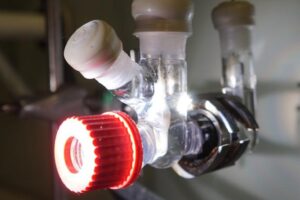
Solar-powered reactor for converting plastic and greenhouse gases into sustainable fuels Credit: Reisner Lab

Solar-powered system converts plastic and greenhouse gases into sustainable fuels

Density separation process during microplastics analysis of samples from Weddell Sea Expedition (c) Nekton

Synthetic fibers discovered in Antarctic air, seawater, sediment and sea ice as the ‘pristine’ continent becomes a sink for plastic pollution

Substack subscription form sign up

Comments

  • Karoly Mirnics on Common Prescription Drugs May Disrupt Cholesterol Pathways in the Womb and Raise Autism Risk
  • Aizen on Laziness helped lead to extinction of Homo erectus
  • Norwood johnson on Electrons in New Crystals Behave as If They Live in Four Dimensions
  • ScienceBlog.com on Hidden Geometry Could Finally Fix Quantum Computers
  • Theo Prinse on America Is Going Back to the Moon. This Time, It Plans to Stay
© 2026 ScienceBlog.com | Follow our RSS / XML feed