Skip to content
ScienceBlog.com
  • Featured Blogs
    • EU Horizon Blog
    • ESA Tracker
    • Experimental Frontiers
    • Josh Mitteldorf’s Aging Matters
    • Dr. Lu Zhang’s Gondwanaland
    • NeuroEdge
    • NIAAA
    • SciChi
    • The Poetry of Science
    • Wild Science
  • Topics
    • Brain & Behavior
    • Earth, Energy & Environment
    • Health
    • Life & Non-humans
    • Physics & Mathematics
    • Social Sciences
    • Space
    • Technology
  • Our Substack
  • Follow Us!
    • Bluesky
    • Threads
    • FaceBook
    • Google News
    • Twitter/X
  • Contribute/Contact

pollinators

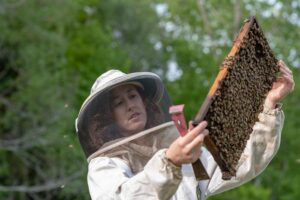
Samantha Alger, director of the Vermont Bee Lab, inspects a frame of bees.

Buzz-Worthy Discovery: New Test Spots Super-Resistant Honey Bees as Colony Losses Mount

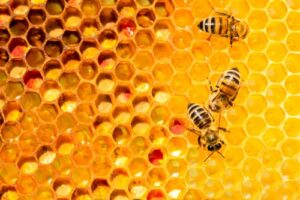
bees on a honeycomb

Dehydration, Not Heat, Poses Unexpected Threat to America’s Bees

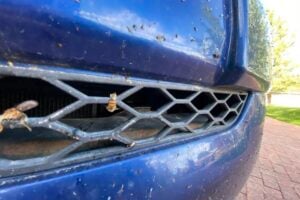
Utah State University ecologist Joseph Wilson and colleagues report millions of bees die in vehicle collisions along Western U.S. highways. As pivotal pollinators, the consequences of these deaths could be significant.

Study Reveals Massive Daily Toll of Bee Deaths on U.S. Highways

Valley carpenter bee.

New Study Reveals Pesticides’ Major Role in Wild Bee Decline Across US

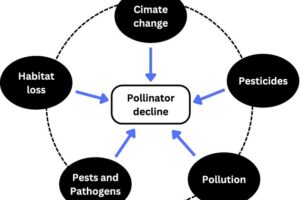
Threats to pollinators

Climate Change Poses Grave Threat to Pollinators, Imperiling Biodiversity and Food Security

a nighttime pollinator, like a moth, holding its nose at the stinky fumes coming off near some wildflowers

Nighttime Pollution Threatens Pollinators

bees drawing

Why are bees making less honey? Study reveals clues in five decades of data

Buzzing insights: tracking bees with robotic flowers and hive sensors

Bumblebee

Getting maximum calories in shortest time is the priority for bumblebees

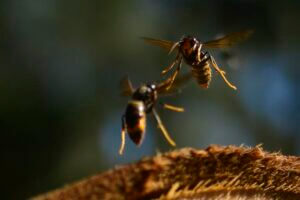
Asian hornets

Bumblebees drop to shake off Asian hornets

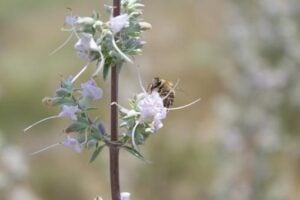
A honey bee visits a white sage plant. Researchers have shown that pollination by honey bees, which are not native to the Americas, produces offspring of considerably inferior quality (lower fitness) than offspring resulting from native pollinators.

Plants pollinated by honey bees produce lower-quality offspring

Researchers from UC San Diego have found that honey bees, which are non-native to the Americas, produce plant offspring of lower quality compared to native pollinators in the San Diego region. Honey bees tend to visit more flowers on a single plant, leading to self-pollination and reduced fitness of the resulting plant offspring. This study highlights the importance of native pollinators for the preservation of native plant species in the face of invasive plant species and emphasizes the need for conservation efforts focused on native plants and bees.
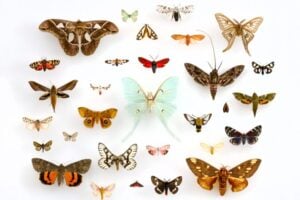
Moths in a case

Blossom at Night: Science Poetry Friday

Facing external threats, bees may get help from internal organisms

Substack subscription form sign up

Comments

  • Booklet AI on Key to online education: Test early and often
  • Karoly Mirnics on Common Prescription Drugs May Disrupt Cholesterol Pathways in the Womb and Raise Autism Risk
  • Aizen on Laziness helped lead to extinction of Homo erectus
  • Norwood johnson on Electrons in New Crystals Behave as If They Live in Four Dimensions
  • ScienceBlog.com on Hidden Geometry Could Finally Fix Quantum Computers
© 2026 ScienceBlog.com | Follow our RSS / XML feed