Skip to content
ScienceBlog.com
  • Featured Blogs
    • EU Horizon Blog
    • ESA Tracker
    • Experimental Frontiers
    • Josh Mitteldorf’s Aging Matters
    • Dr. Lu Zhang’s Gondwanaland
    • NeuroEdge
    • NIAAA
    • SciChi
    • The Poetry of Science
    • Wild Science
  • Topics
    • Brain & Behavior
    • Earth, Energy & Environment
    • Health
    • Life & Non-humans
    • Physics & Mathematics
    • Social Sciences
    • Space
    • Technology
  • Our Substack
  • Follow Us!
    • Bluesky
    • Threads
    • FaceBook
    • Google News
    • Twitter/X
  • Contribute/Contact

Precision Measurements

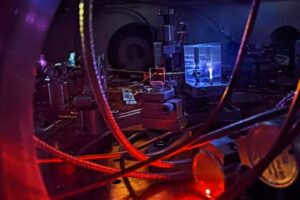
A powerful laser is directed into a jet of gas, forming a bright plasma that generates ultraviolet light. As this light interacts with the remaining gas in the vacuum chamber, it creates a visible white line. This method allows scientists to accurately measure the energy required to excite the thorium-229 nucleus, which is crucial for developing a future nuclear clock.

Nuclear Clocks: The Next Frontier in Ultraprecise Timekeeping

A laser beam hits thorium nuclei, embedded in a crystal.

Scientists Excite Thorium-229 Nucleus with Laser, Paving the Way for Unprecedented Precision Measurements

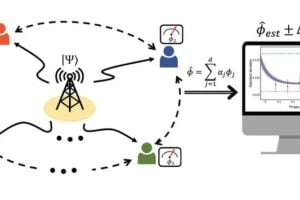
Send quantum states from a centralized location to each node distributed over a large area to obtain an average of the phases.

Quantum Sensor Boosts Precision Measurements

Substack subscription form sign up

Comments

  • Norwood johnson on Electrons in New Crystals Behave as If They Live in Four Dimensions
  • ScienceBlog.com on Hidden Geometry Could Finally Fix Quantum Computers
  • Theo Prinse on America Is Going Back to the Moon. This Time, It Plans to Stay
  • george w on Hidden Geometry Could Finally Fix Quantum Computers
  • Tom Hughes on Years of Exercise, Blood Pressure Drugs Failed to Slow Cognitive Decline in Seniors at Dementia Risk
© 2026 ScienceBlog.com | Follow our RSS / XML feed