Skip to content
ScienceBlog.com
  • Featured Blogs
    • EU Horizon Blog
    • ESA Tracker
    • Experimental Frontiers
    • Josh Mitteldorf’s Aging Matters
    • Dr. Lu Zhang’s Gondwanaland
    • NeuroEdge
    • NIAAA
    • SciChi
    • The Poetry of Science
    • Wild Science
  • Topics
    • Brain & Behavior
    • Earth, Energy & Environment
    • Health
    • Life & Non-humans
    • Physics & Mathematics
    • Social Sciences
    • Space
    • Technology
  • Our Substack
  • Follow Us!
    • Bluesky
    • Threads
    • FaceBook
    • Google News
    • Twitter/X
  • Contribute/Contact

Protein production

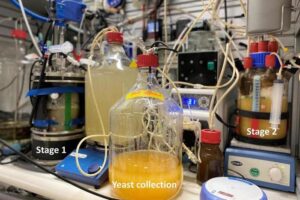
co2 to food set up

Eating Air: Microbial Protein as a Sustainable Food Source

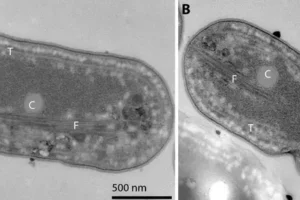
Cyanobacteria with protein fibres seen through a microscope. The protein fibres are marked 'F'.

Scientists use blue-green algae as a surrogate mother for “meat-like” proteins

Human cell cross-section. Pixabay

Oldest known molecule surprises researchers

Zemfira Karamysheva, Ph.D., (TTU, pictured) and Andrey Karamyshev, Ph.D., (TTUHSC) investigated the molecular mechanisms responsible for producing antimony drug resistance in Leishmania parasites. Their study was published in May by Nature Communications.

Researchers Uncover Protein Regulation in Leishmaniasis Drug Resistance

Substack subscription form sign up

Comments

  • Sue Ann Hayes on Hidden Nuclear Protein Fuels Pancreatic Cancer’s Deadly Aggression
  • Curtis Webber on The GPS-Killer? This Quantum Device ‘Feels’ Motion Like a Brain—Down to the Atomic Level
  • Ran on How the Age You First Had Sex Could Shape How You Age Decades Later
  • Sparty on How the Age You First Had Sex Could Shape How You Age Decades Later
  • Josh Mitteldorf on A Single TV Segment Sent Leucovorin Prescriptions for Autistic Children Soaring 2,000 Percent
© 2026 ScienceBlog.com | Follow our RSS / XML feed