Skip to content
ScienceBlog.com
  • Featured Blogs
    • EU Horizon Blog
    • ESA Tracker
    • Experimental Frontiers
    • Josh Mitteldorf’s Aging Matters
    • Dr. Lu Zhang’s Gondwanaland
    • NeuroEdge
    • NIAAA
    • SciChi
    • The Poetry of Science
    • Wild Science
  • Topics
    • Brain & Behavior
    • Earth, Energy & Environment
    • Health
    • Life & Non-humans
    • Physics & Mathematics
    • Social Sciences
    • Space
    • Technology
  • Our Substack
  • Follow Us!
    • Bluesky
    • Threads
    • FaceBook
    • Google News
    • Twitter/X
  • Contribute/Contact

protein

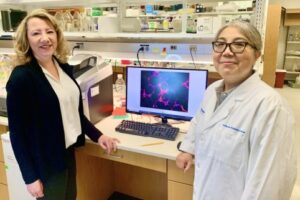
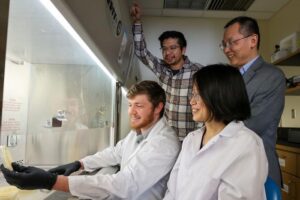
From top left: Biologist Bryan Hsu with immunologist Liwu Li. Bottom left: Zachary Baker, a doctoral student in the Hsu Lab, and research assistant professor Yao Zhang from the Li Lab.

Biologists transform gut bacteria into tiny protein pharmacies

Christine M. Kusminski, Ph.D., Associate Professor of Internal Medicine (left), and Xinxin Yu, M.D., Research Scientist, are studying the effects of the glucose-dependent insulinotropic polypeptide receptor (GIPR) on fat cells as a possible therapy for obesity.

Study Reveals New Target for Weight Loss: Fat Cell Receptor Leads to 35% Weight Reduction

Ohio State logo

New findings on animal viruses with potential to infect humans

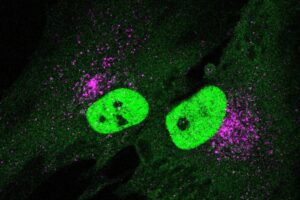
When the protein STING (pink) is activated, the transcription factor TFEB (green) is shuttled into the nucleus where it stimulates the production of lysosomes

STING Protein Plays Dual Role in Cellular Health and Aging, Pitt Study Finds

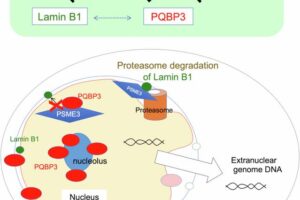
Researchers investigated the function of PQBP3, a protein that was previously linked to certain neurodegenerative diseases, and unveiled its role in maintaining the integrity of the nuclear membrane. In senescent (aged) cells, PQBP3 concentration is decreased thereby promoting Lamin B1 degradation, and PQBP3 leaks from its typical place in the nucleolus to the cytosol, which in turn causes the nuclear membrane to get destabilized.

Protein Discovery Illuminates Link Between Aging and Brain Diseases

Ohio State logo

A bacterial defense with potential application in genome editing

WeGovy semaglutide

New research demonstrates potential for increasing effectiveness of popular diabetes, weight-loss drugs

a stylized illustration of a person's silhouette with a glowing, orange-colored region in the upper back and neck area, representing active brown fat.

Scientists Discover “Off Switch” Protein That Limits Brown Fat’s Calorie-Burning Potential

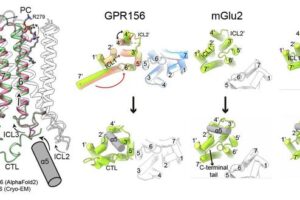
activation mechanism of GPR156

Unveiling the Secrets of Hearing: Scientists Discover Key Receptor Protein

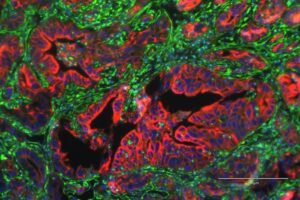
Micrograph showing a pancreatic tumor with experimentally depleted levels of En1, which reduces metastatic activity.

Researchers identify protein linked to metastasis in pancreatic cancer

Scientists tame chaotic protein fueling 75% of cancers

Scientists tame chaotic protein fueling 75% of cancers

Bowl full of algae based curry

Algae as a surprising meat alternative and source of environmentally friendly protein

Ohio State logo

A rare enzyme role change with bacterial defense system assembly

Ohio State logo

Yogurt may be the next go-to garlic breath remedy

Older posts
Page1 Page2 Next →
Substack subscription form sign up

Comments

  • Brunette Keller on How New Herpes Drugs Jam a Virus’s Replication Engine
  • Aizen on Laziness helped lead to extinction of Homo erectus
  • Norwood johnson on Electrons in New Crystals Behave as If They Live in Four Dimensions
  • ScienceBlog.com on Hidden Geometry Could Finally Fix Quantum Computers
  • Theo Prinse on America Is Going Back to the Moon. This Time, It Plans to Stay
© 2026 ScienceBlog.com | Follow our RSS / XML feed