Skip to content
ScienceBlog.com
  • Featured Blogs
    • EU Horizon Blog
    • ESA Tracker
    • Experimental Frontiers
    • Josh Mitteldorf’s Aging Matters
    • Dr. Lu Zhang’s Gondwanaland
    • NeuroEdge
    • NIAAA
    • SciChi
    • The Poetry of Science
    • Wild Science
  • Topics
    • Brain & Behavior
    • Earth, Energy & Environment
    • Health
    • Life & Non-humans
    • Physics & Mathematics
    • Social Sciences
    • Space
    • Technology
  • Our Substack
  • Follow Us!
    • Bluesky
    • Threads
    • FaceBook
    • Google News
    • Twitter/X
  • Contribute/Contact

Rare

Within a dense system some terbium ions form pair states. Because of their unique properties, these pairs are blind to the single terbium ions nearby that would cause them to lose their quantum information. Protected from their messy environment, they can act as qubits with surprisingly long coherence lifetimes.

Solid-state qubits: Forget about being clean, embrace mess

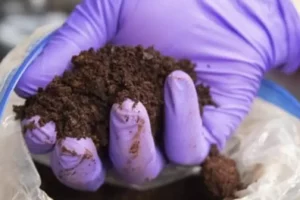
Biology has already been harvesting and harnessing the power of rare earths for millennia, especially in a class of bacteria called "methylotrophs." Credit: Patrick Mansell/Penn State

A protein mines and sorts rare earths, paving way for green tech

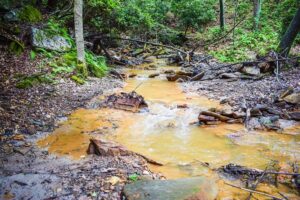
Coal mine drainage impairs thousands of miles of waterways in the U.S. every year, disrupting the growth of all kinds of aquatic plants and animals.

Turning coal mine drainage into a source of rare minerals

Substack subscription form sign up

Comments

  • Booklet AI on Key to online education: Test early and often
  • Karoly Mirnics on Common Prescription Drugs May Disrupt Cholesterol Pathways in the Womb and Raise Autism Risk
  • Aizen on Laziness helped lead to extinction of Homo erectus
  • Norwood johnson on Electrons in New Crystals Behave as If They Live in Four Dimensions
  • ScienceBlog.com on Hidden Geometry Could Finally Fix Quantum Computers
© 2026 ScienceBlog.com | Follow our RSS / XML feed