Skip to content
ScienceBlog.com
  • Featured Blogs
    • EU Horizon Blog
    • ESA Tracker
    • Experimental Frontiers
    • Josh Mitteldorf’s Aging Matters
    • Dr. Lu Zhang’s Gondwanaland
    • NeuroEdge
    • NIAAA
    • SciChi
    • The Poetry of Science
    • Wild Science
  • Topics
    • Brain & Behavior
    • Earth, Energy & Environment
    • Health
    • Life & Non-humans
    • Physics & Mathematics
    • Social Sciences
    • Space
    • Technology
  • Our Substack
  • Follow Us!
    • Bluesky
    • Threads
    • FaceBook
    • Google News
    • Twitter/X
  • Contribute/Contact

related diseases

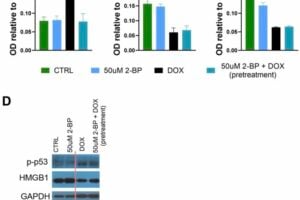
Figure 4. Effect of 2-BP treatment on senescence markers. Levels of p-p53 (A), HMGB1 (B), and lamin B1 (C) were measured in cell extracts from VSMCs. Cells were either pretreated with 2-BP for 24 hours before doxorubicin (DOX) treatment or treated with 2-BP alone for the specified durations. Protein levels were assessed using Western blotting, with representative blots shown (the red line indicates where the blot was cut) (D). Data are presented as means ± SEM from N=3 biological replicates. Statistical significance was determined using one-way ANOVA; *p

Protein Modification May Hold Key to Reversing Cellular Aging

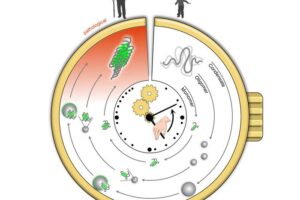
Visualization of a protein aggregation clock

A new approach to assessing aging and disease risk: The protein aggregation clock

Nathan Harrison, Flinders University, in Australia

Stigmatization of smoking-related diseases is a barrier to care and the problem may be on the rise

Fruit flies on a rapamycin pill

Do women age differently from men?

Substack subscription form sign up

Comments

  • Norwood johnson on Electrons in New Crystals Behave as If They Live in Four Dimensions
  • ScienceBlog.com on Hidden Geometry Could Finally Fix Quantum Computers
  • Theo Prinse on America Is Going Back to the Moon. This Time, It Plans to Stay
  • george w on Hidden Geometry Could Finally Fix Quantum Computers
  • Tom Hughes on Years of Exercise, Blood Pressure Drugs Failed to Slow Cognitive Decline in Seniors at Dementia Risk
© 2026 ScienceBlog.com | Follow our RSS / XML feed