Skip to content
ScienceBlog.com
  • Featured Blogs
    • EU Horizon Blog
    • ESA Tracker
    • Experimental Frontiers
    • Josh Mitteldorf’s Aging Matters
    • Dr. Lu Zhang’s Gondwanaland
    • NeuroEdge
    • NIAAA
    • SciChi
    • The Poetry of Science
    • Wild Science
  • Topics
    • Brain & Behavior
    • Earth, Energy & Environment
    • Health
    • Life & Non-humans
    • Physics & Mathematics
    • Social Sciences
    • Space
    • Technology
  • Our Substack
  • Follow Us!
    • Bluesky
    • Threads
    • FaceBook
    • Google News
    • Twitter/X
  • Contribute/Contact

scientific research

To make element 116, researchers fused isotopes of titanium and plutonium.

New Progress Toward the Discovery of New Elements

Still frame images of Digit III, the middle toe, of a live Aneides vagrans. Images were taken with the salamander in a neutral posture on a flat surface from (A) dorsal, (B) lateral, and (C) ventral views. These images show the digital sinus and the bifurcated terminal phalanx of a living salamander; the structure of these features was corroborated by our histological preparations, shown in Figures 3 and 4.

Blood-Powered ‘Hydraulic Toes’ Help Salamanders Master Tree-Top Acrobatics

infographic

AI Outpaces Brain Experts at Predicting Study Results

A researcher at Binghamton University, State University of New York has developed a tool to root out bogus, AI-generated research articles.

New AI Tool Detects Fake Scientific Articles with 94% Accuracy

Official portrait of NASA astronaut Jonny Kim in an EMU suit. Credit: NASA

NASA Taps Former Navy SEAL for International Space Station Mission

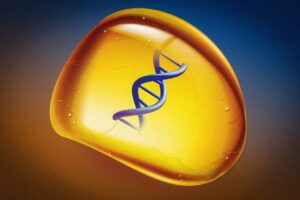
The glassy, amber-like polymer can be used for long-term storage of DNA, such as entire human genomes or digital files such as photos. Credits:Image: MIT News; iStock

Scientists preserve DNA in an amber-like polymer

atmosphere

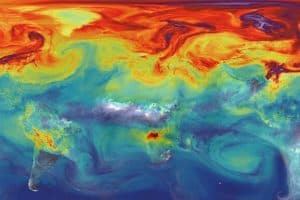
Researchers Uncover Unified Turbulence Laws Connecting Earth’s Atmosphere and Near-Space Environment

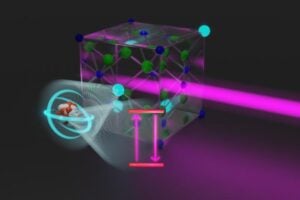
A laser beam hits thorium nuclei, embedded in a crystal.

Scientists Excite Thorium-229 Nucleus with Laser, Paving the Way for Unprecedented Precision Measurements

Illustration of the body plan of a toothed whale, with a cross section of the head showing the melon (dark yellow) and the extramandibular fat bodies (light yellow) which are key organs for using sound such as echolocation. (Hayate Takeuchi, Takashi Fritz Matsuishi, Takashi Hayakawa. Gene. January 20, 2024)

Toothed whale echolocation organs evolved from jaw muscles

Chemical bonds

Researchers Boost Chemical Reaction Calculation Speed by 30-40X

Ohio State logo

The role of machine learning and computer vision in Imageomics

A hypothetical fractal forest generated with AI

Complexity of forests cannot be explained by simple mathematical rules

Artist impression showing UVC light degrading SARS-CoV-2 viral particle.

Scientists discover how ultraviolet light degrades coronavirus

Gabe Gomez

Artificially Intelligent Coscientist Automates Scientific Discovery

Older posts
Page1 Page2 … Page4 Next →
Substack subscription form sign up

Comments

  • Karoly Mirnics on Common Prescription Drugs May Disrupt Cholesterol Pathways in the Womb and Raise Autism Risk
  • Aizen on Laziness helped lead to extinction of Homo erectus
  • Norwood johnson on Electrons in New Crystals Behave as If They Live in Four Dimensions
  • ScienceBlog.com on Hidden Geometry Could Finally Fix Quantum Computers
  • Theo Prinse on America Is Going Back to the Moon. This Time, It Plans to Stay
© 2026 ScienceBlog.com | Follow our RSS / XML feed