Skip to content
ScienceBlog.com
  • Featured Blogs
    • EU Horizon Blog
    • ESA Tracker
    • Experimental Frontiers
    • Josh Mitteldorf’s Aging Matters
    • Dr. Lu Zhang’s Gondwanaland
    • NeuroEdge
    • NIAAA
    • SciChi
    • The Poetry of Science
    • Wild Science
  • Topics
    • Brain & Behavior
    • Earth, Energy & Environment
    • Health
    • Life & Non-humans
    • Physics & Mathematics
    • Social Sciences
    • Space
    • Technology
  • Our Substack
  • Follow Us!
    • Bluesky
    • Threads
    • FaceBook
    • Google News
    • Twitter/X
  • Contribute/Contact

Seed dispersal

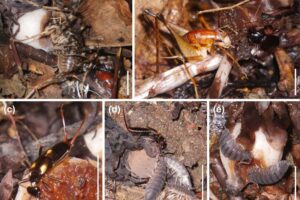
Nightly automated photography revealed which animals are the main consumers of the fruit: camel crickets (A: Diestrammena japonica, B left: Diestrammena brunneri), ground beetles (B right: Synuchus sp.), earwigs (C, D top: Eparchus yezoensis) and woodlice (D bottom, E: Porcellio scaber).

Tiny Invertebrates Like Woodlice and Earwigs Found to Disperse Seeds, Setting New Record

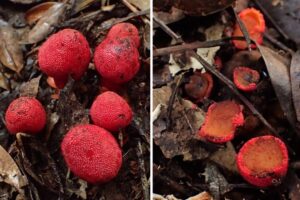
Each round mass looks like a single fruit, However, each cluster is composed of several thousand fruits, each measuring approximately 0.3 mm in size. Upon closer examination, the clusters can be seen to be composed of numerous red bumps These bumps are not the fruits, but modified leaves that that hide the actual fruits underneath.

Endangered Amami rabbit disperses seeds for non-photosynthetic plant

Substack subscription form sign up

Comments

  • Brunette Keller on How New Herpes Drugs Jam a Virus’s Replication Engine
  • Aizen on Laziness helped lead to extinction of Homo erectus
  • Norwood johnson on Electrons in New Crystals Behave as If They Live in Four Dimensions
  • ScienceBlog.com on Hidden Geometry Could Finally Fix Quantum Computers
  • Theo Prinse on America Is Going Back to the Moon. This Time, It Plans to Stay
© 2026 ScienceBlog.com | Follow our RSS / XML feed